


EU Digital Product Passport Registry Goes Live: Why Fashion’s Next Trust Test Is Data, Not Design
Fashion's next credibility test may not happen on a runway or in a campaign. It may happen in a product database. On July 20, 2026, the European Commission launched the Digital Product Passport Registry with a testing environment, turning one of Europe's most discussed

Fashion’s next credibility test may not happen on a runway or in a campaign. It may happen in a product database. On July 20, 2026, the European Commission launched the Digital Product Passport Registry with a testing environment, turning one of Europe’s most discussed sustainability tools into a more practical system for businesses placing products on the EU market.
The development matters for fashion because textiles are one of the product groups covered by the Ecodesign for Sustainable Products Regulation, even though sector-specific requirements and deadlines for apparel still need to be phased in. The Digital Product Passport is designed as a digital container for product information: identifiers, metadata and other data that can support transparency, consumer information and compliance checks. Product data will be stored in a decentralised way, but economic operators will need to register each passport in the EU Registry.
That may sound administrative, but it changes the center of gravity for fashion. For years, many brand sustainability claims lived in soft language: responsible, conscious, lower impact, carefully sourced. Digital product passports push the industry toward harder questions. What is the garment made from? Where did the material move? Which identifiers connect the product to reliable data? Who can verify the information if a regulator, recycler, repairer, retailer or customer needs it?
The timing is important because the EU is also tightening rules around product waste. From July 19, 2026, large companies are subject to a ban on destroying unsold apparel, clothing accessories and footwear, with limited derogations for cases such as safety concerns or product damage. The European Commission has estimated that 4 to 9 percent of unsold textiles in Europe are destroyed before being worn. Disclosure rules for discarded unsold consumer goods will also require a standardised format from February 2027.
Together, these measures move fashion away from a culture where excess stock can disappear quietly. If a brand produces too much, mislabels fiber content, loses track of materials or cannot explain what happens to unsold goods, the problem is no longer only reputational. It becomes a compliance, data and operations issue. This is why the Digital Product Passport is not just a sustainability badge. It is part of the infrastructure that could make vague product claims harder to maintain.
Recent reporting shows why that matters. Vogue Business reported on July 16 that a European Commission market surveillance campaign found nearly 40 percent of tested garments across 10 EU member states had inaccurate fiber composition labels. The problem was especially high for blends of synthetic and natural fibers, and online purchases had a higher failure rate than items bought in physical stores. For shoppers, this means a label can be less reliable than it appears. For brands, it means supply chain knowledge can no longer stop at the tier that ships the finished product.
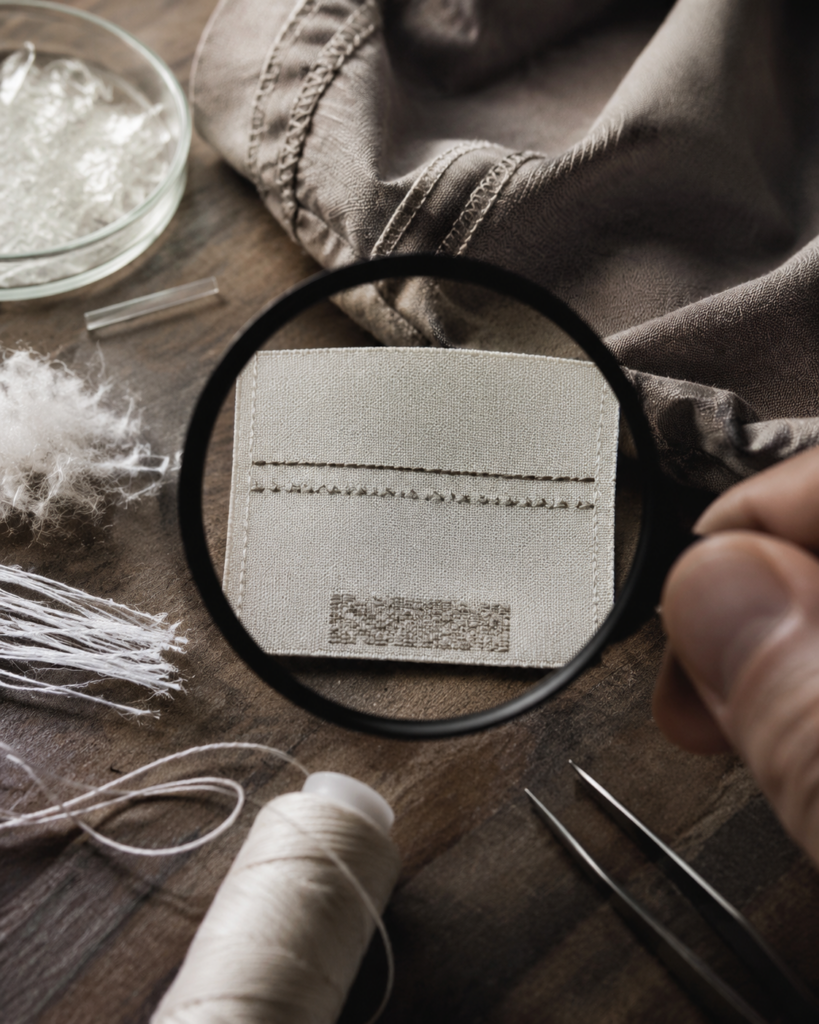
The industry is already trying to build the shared language needed for that shift. On July 14, Textile Exchange, Apparel Impact Institute, Cascale and ZDHC Foundation announced Version 2 of the Supply Chain Taxonomy, a harmonised framework for the textile, clothing, leather and footwear sectors. Its purpose is not consumer storytelling. It is consistency: clearer process boundaries, more comparable data, better reporting and less duplication across the supply chain.
This is where the story becomes relevant beyond Europe. Any international brand selling into the EU will have to pay attention to the direction of regulation, even if implementation arrives in stages. US, UK, Australian, Japanese or Korean labels that treat EU compliance as a regional back-office task may find that the same data becomes useful elsewhere: for customs documentation, resale authentication, repair services, material claims, wholesale reporting and consumer trust.

The shift will not be painless. Smaller brands may face software costs, supplier coordination problems and pressure to translate complex material information into data systems they did not build. Luxury brands may worry that more product visibility complicates scarcity management, especially as the destruction ban limits old ways of handling unsold inventory. Multi-brand retailers will have to decide how much product information they expect from suppliers before listing goods.
The consumer-facing result may be quieter than many people expect. A digital product passport will not make every shopper scan every garment. Its real effect may be upstream: forcing brands to know more before a product reaches the selling floor. The most useful future label may not be a poetic sustainability claim. It may be a scannable record that makes fiber content, care, repair, origin, durability and end-of-life information easier to check.

The takeaway is simple: fashion transparency is becoming technical. Style, price and desirability still matter, but the next phase of trust will depend on whether brands can prove what they say about a product. The EU’s new Registry does not solve fashion’s data problem by itself. It does, however, make clear that the industry is moving toward a world where product information has to be structured, traceable and ready for verification.