


Deer Print and Brocade Are Moving Beyond Tartan as Fall/Winter 2026’s Defining Prints
For years, autumn has run on two safe prints: tartan and leopard. They were the fallback — a low-risk way to look seasonal without committing to a point of view. Fall/Winter 2026 is adding two fresher options to that shortlist: a soft, tawny deer
For years, autumn has run on two safe prints: tartan and leopard. They were the fallback — a low-risk way to look seasonal without committing to a point of view. Fall/Winter 2026 is adding two fresher options to that shortlist: a soft, tawny deer print that the internet has nicknamed Bambi core, and a wave of brocade, jacquard and tapestry fabrics that editors are grouping under names like “heirloom dressing” and “the new ornate.” Neither replaces the old favourites; both reframe what a print can do. The story is not that prints are back. It is that they have changed, and the way people wear them has changed with them.
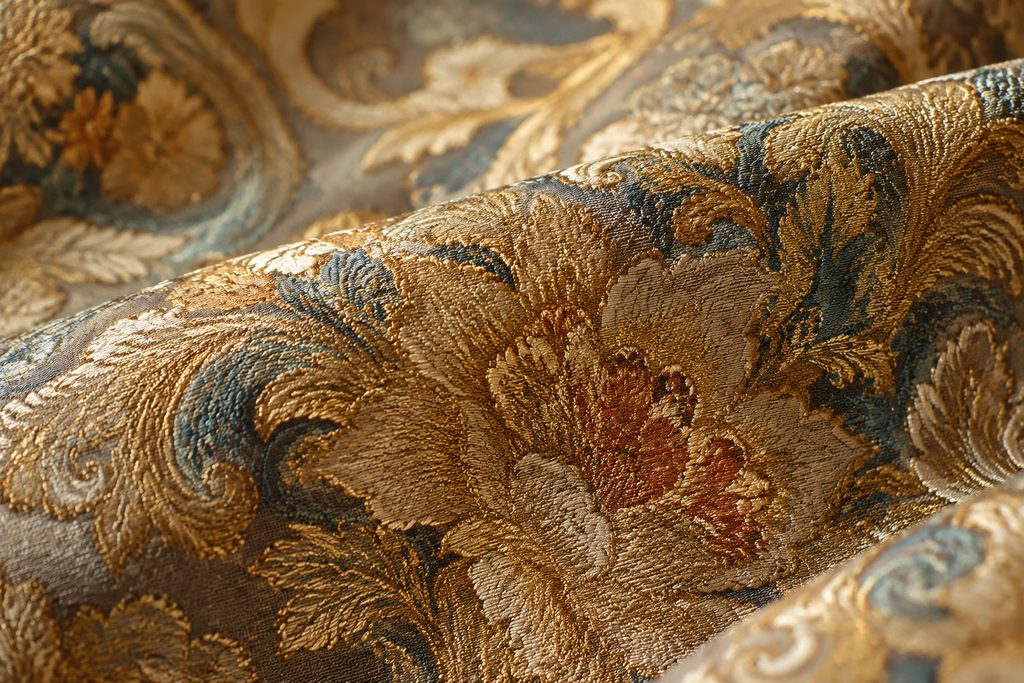
The signal runs straight from the Fall/Winter 2026 runways into the shops readers are browsing right now. On the runway, the move was toward maximalist, craft-heavy surfaces — Dior showed metallic jacquards that read like antique tapestries and reworked its Bar jacket in multicolour brocade; Dries Van Noten cut a richly embroidered coat; Erdem, Simone Rocha, Anna Sui and Etro all pushed upholstery-like florals and tapestry prints. Vogue Arabia described it as a rediscovery of “heirloom dressing,” and Net-a-Porter called it “the new ornate.” By October, the same fabrics had reached the high street, with brocade and jacquard jackets turning up at Zara, Mango, Boden, STAUD and Reformation.
The first expression of the shift is the deer print. Where leopard and zebra announce themselves, deer print whispers. It is a tawny, camel-toned pattern scattered with cream spots — fashion media has compared it to a refined, wintry take on polka dots. It arrived as the quiet-luxury answer to animal print: a softer, less predatory pattern that still reads as a statement. Tory Burch has been credited with championing it on the runway, and the pieces have since moved through celebrity styling — Katie Holmes and Sarah Paulson both wore versions — and into the mainstream, from David Koma’s graphic, gradient takes to a sold-out faux-fur Sandy Liang x Gap sweater and a Next bomber being tipped as an autumn best-seller.
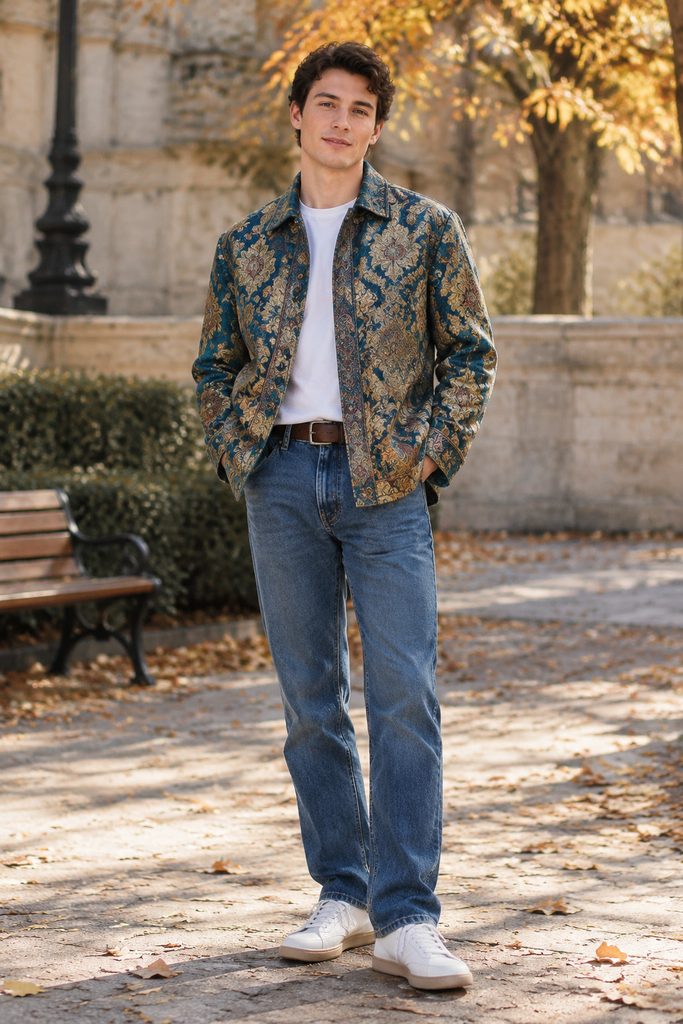
The second expression is brocade and jacquard, and here the shift is as much about styling as about the fabric itself. These were once evening and occasion fabrics — the stuff of heirloom closets and formalwear. The Fall 2026 move is to treat them as casual layers: the most-cited formula is a brocade or tapestry jacket thrown over jeans and a white T-shirt or fine knit, with one colour from the pattern echoed elsewhere in the outfit. The ornate jacket becomes the single loud piece, and everything around it stays quiet. This is what turns an heirloom fabric into an everyday one — and it is the same contrast logic that has been animating sequins and leather all season.
That contrast formula is why this matters to international readers, across climates and wardrobes. A brocade or jacquard jacket works as a light statement layer in a mild Southern European or coastal autumn and slips under a coat in a colder Northern European or North American one, so it is not confined to a single season or occasion. And because these prints are worn repeatedly rather than saved for a party, they change the cost-per-wear math: a statement piece that goes over jeans weekly earns its price in a way a once-a-year formal piece cannot. Two practical checks are worth naming. The first is colour: deer print’s warm, low-contrast palette reads softly across a wide range of skin tones, which is part of why it feels like the gentler entry point. The second is fit: brocade and jacquard have little stretch, so the structured, curve-friendly and inclusive-sizing options are the ones to look for.
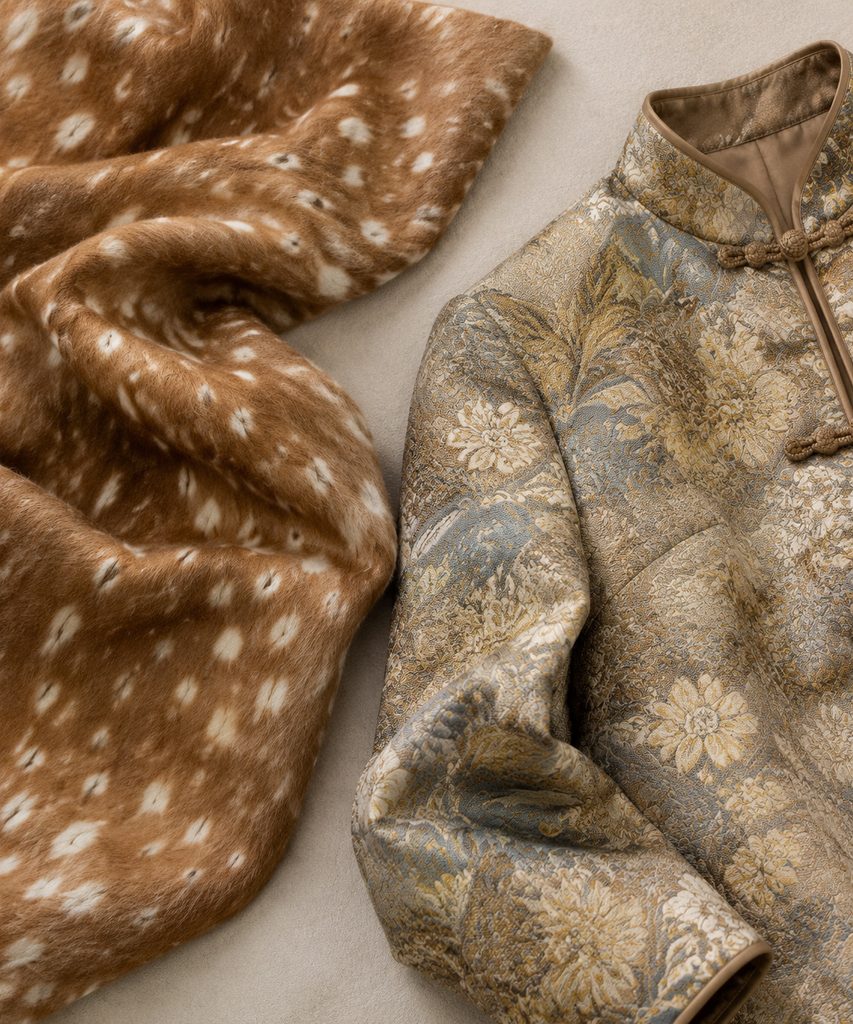
The takeaway is simple: the safe choice is no longer the only choice. Tartan and leopard still work — they just read as the expected move now — while the fresher way to signal that you are actually thinking about what you wear is to reach for the stranger, softer print: a deer-print piece or a brocade jacket, worn like it is a T-shirt. What to watch next is print mixing, which Gen Z-driven styling is pushing under the name “printmaxxing.” The direction is the same one the whole season has been pointing toward: more, but worn more casually.