


When Clothes Fit but Still Do Not Work
Fashion has learned to ask a more useful question about size: who can actually find this garment in their measurements? The next question is less visible but just as important: who can get into it, close it, adjust it and live in it with
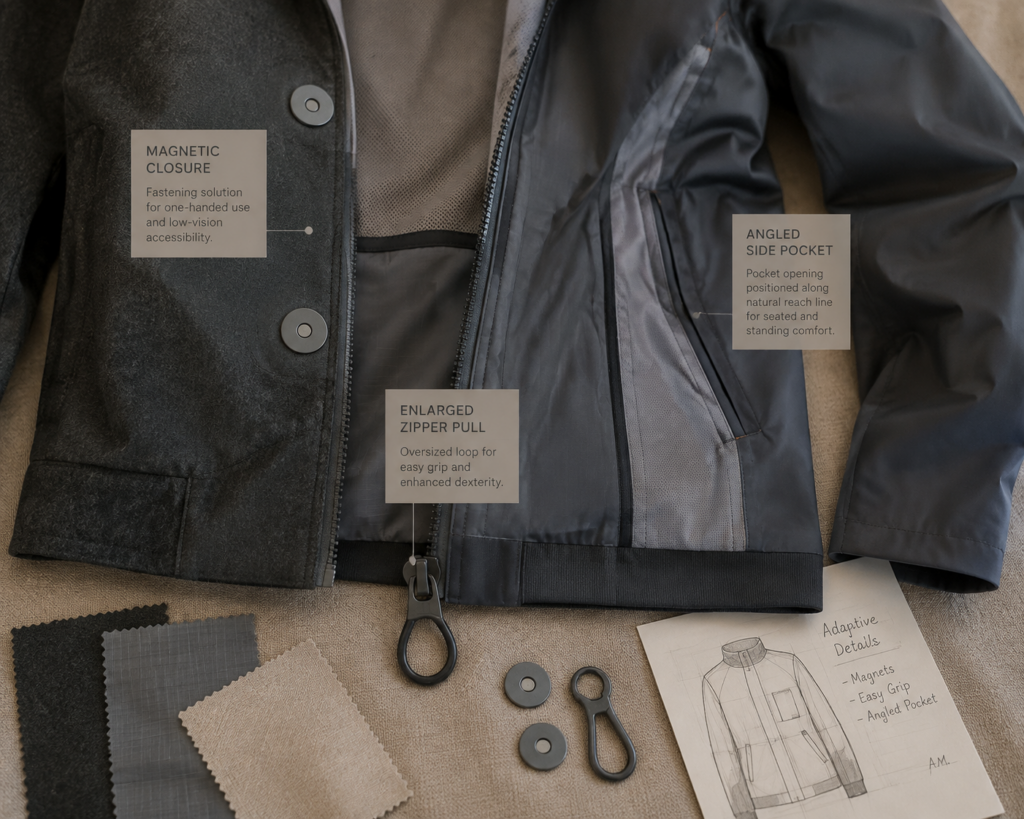
Fashion has learned to ask a more useful question about size: who can actually find this garment in their measurements? The next question is less visible but just as important: who can get into it, close it, adjust it and live in it with the level of assistance they choose? A jacket can come in an impressive size range and still be inaccessible if its buttons require fine dexterity, its pockets disappear when someone sits, or its hem assumes a symmetrical standing body.
That is not a small technical detail. Design can expand or restrict how much control a person has over getting dressed and staying comfortable through the day. Inclusive fashion is often discussed through grading and size charts, but real wearability also depends on closures, reach, pressure, texture, posture and the amount of effort required to dress.
The need is not marginal. The World Health Organization estimates that 1.3 billion people, or 16 percent of the world’s population, experience significant disability. Exclusion in everyday clothing is therefore not a niche oversight. A huge number of people have been expected to adapt themselves to clothes that were never designed around their lives.
The most interesting recent work treats adaptation as a design brief, not a visible medical label. In the CFDA/Vogue Fashion Fund’s collaboration with Tilting the Lens, designers explored magnetic closures for easy access, pockets shaped around the objects a wearer carries, and garments that accommodate one-handed movement or a wheelchair posture. The point was not to remove style. It was to move the intelligence of the design into the places most fashion photography ignores.
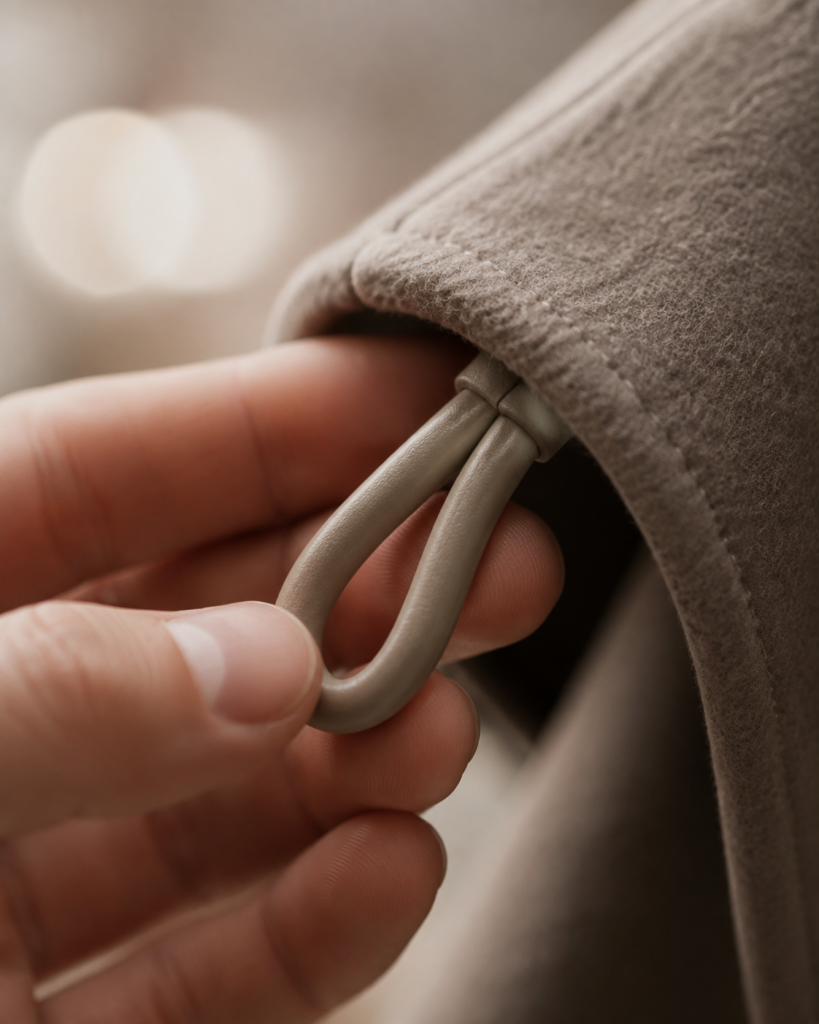
Closures are the clearest starting point. A larger pull, a loop that can be caught with one hand, or a side opening can preserve the visual line while reducing physical demand. Magnetic fastenings may help some wearers, but they are not universal and require clear safety information and non-magnetic alternatives. Elastic is not automatically better either: it may be comfortable for one wearer and restrictive for another. The question is not whether a feature looks adaptive. It is whether it works safely for the person using it.
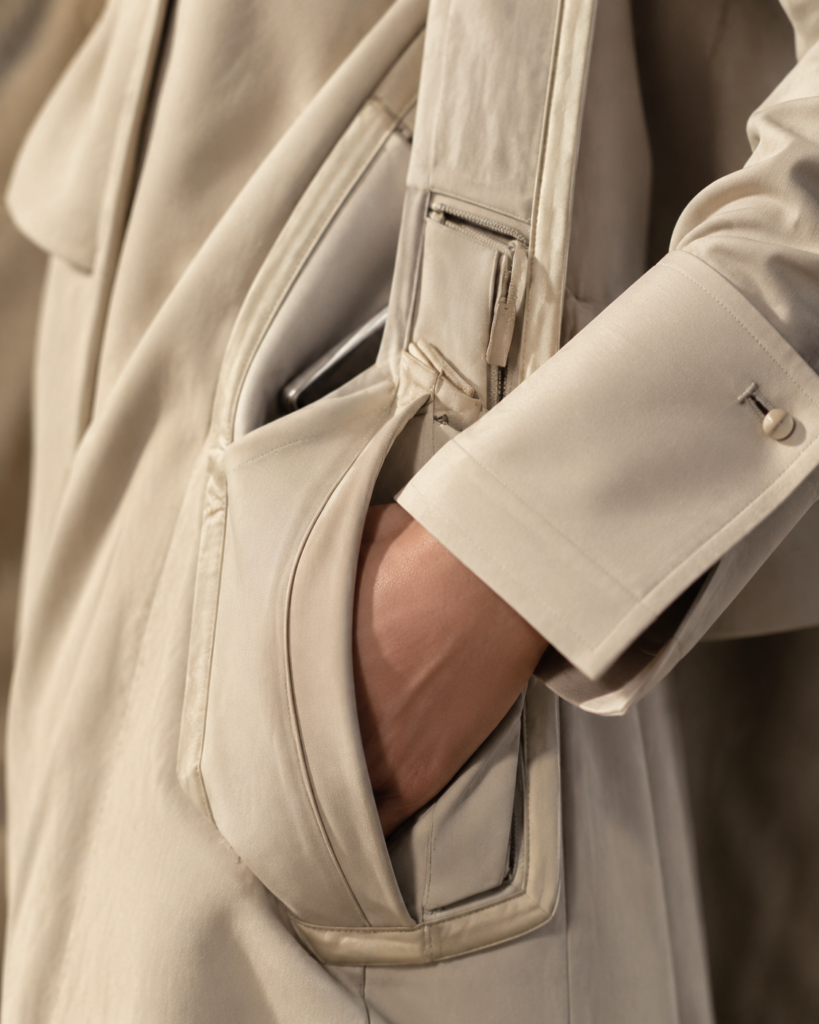
The same logic applies to pockets. Someone who uses a wheelchair may need a pocket that remains reachable while seated. Someone with a prosthetic limb may need the opening at a different angle. A parent, commuter or person carrying medication may need secure access without a bag. When design begins with what the wearer carries and how they move, utility becomes part of elegance rather than a compromise to it.
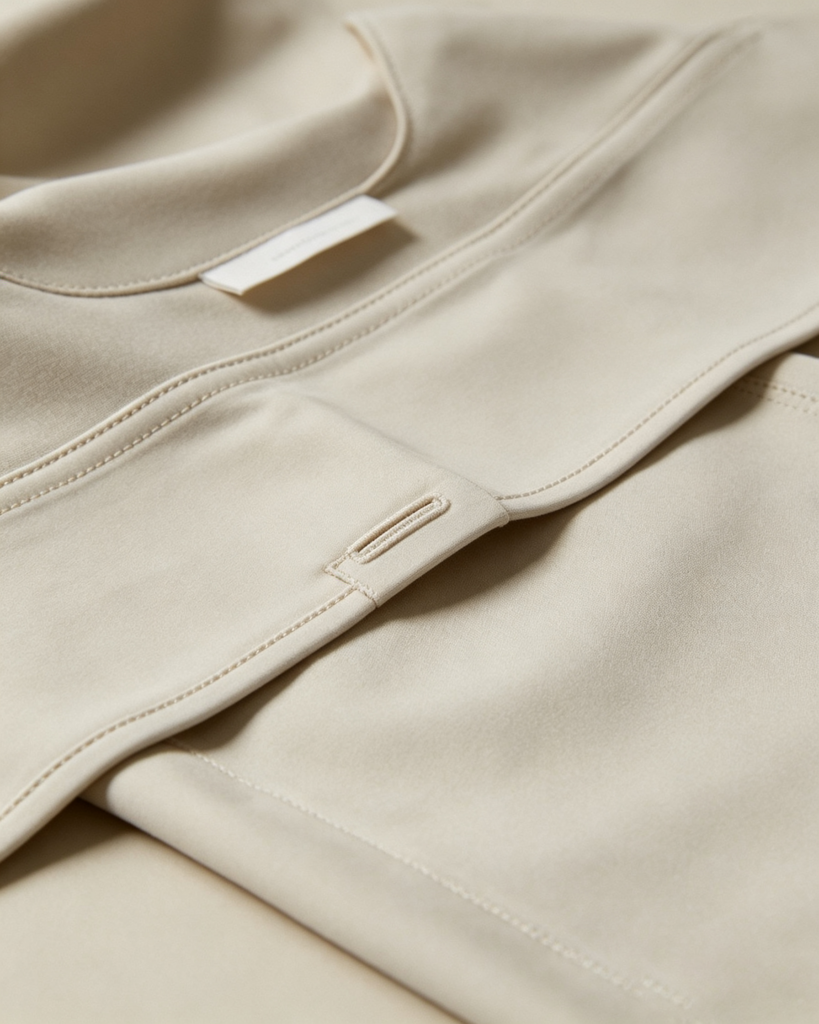
Posture changes the entire pattern. A trouser cut that looks balanced on a standing model may pull across the waist when seated. A jacket sleeve may twist around a wheelchair rim. A coat that is perfect at the back of the neck may bunch against a headrest. These are not problems solved by simply adding more fabric. They require patternmaking that understands different positions as normal positions. The V&A’s 2025 case study of Janet Jones’s 1960s wedding dress makes this visible in historical form: born with hip conditions and one leg longer than the other, Jones worked with tailors so her clothing sat straight on her body. Her hand-painted orthopaedic wedding shoes show adaptation as authorship, not as an apology.
Sensory and visual experience deserve the same seriousness. A stiff seam, rough label or noisy fastener can make a garment unwearable for someone with sensory sensitivities, even when the fit is technically correct. Visual contrast shows why no feature is universally accessible: it may help a low-vision wearer locate an opening, while a busy pattern may overwhelm someone else. Soft finishes, removable labels, considered contrast and predictable layers are part of the garment’s user interface. They can also help children, older adults, people recovering from injury and anyone whose hands are cold or tired.
Climate makes the brief more complex. In humid cities, a useful closure still needs a garment that vents heat. In cold climates, it may have to work with gloves. Where modesty or cultural dress matters, an adaptive opening must protect coverage as carefully as movement. Universal design does not mean one identical garment for everyone. It means enough flexibility for different bodies, routines and climates.
There are three practical tests a brand can apply before calling a product inclusive. First, the entry test: can the wearer put it on and take it off with the strength, reach and dexterity they actually have? Second, the movement test: does it remain comfortable while walking, sitting, reaching, using a mobility aid or carrying a bag? Third, the maintenance test: can it be washed, repaired and adjusted without unnecessary specialist help? These tests are a starting point, not a substitute for designing and testing with disabled wearers. A garment that passes only the size chart has not finished its design work.
For shoppers, the framework becomes a value test. Try every closure more than once. Sit down, reach forward and check whether a pocket works with the hand you rely on. Read the care label and inspect the seams. These checks are relevant to any body because bodies change through injury, age, pregnancy, medication, work and weather.
The shareable insight is simple: accessible clothing is not a separate category of kindness. It is clothing designed with more of its users in mind. The best adaptive detail may be invisible – a pull that catches easily, a pocket placed at the right angle, a sleeve that stays comfortable in motion – but its effect is tangible. It removes avoidable friction and leaves more choice and control with the wearer.
Inclusive fashion will become more credible when it stops treating size as the finish line. A beautiful garment should not merely fit a body in a still photograph. It should cooperate with that body through a morning, a commute, a meal, a workday and a change of weather. The future of fashion is not a single ideal fit. It is a better relationship between clothes and the many ways people move through the world.