


The Status Bag Stopped Shouting: Why the Most-Coveted Handbag of 2026 Has No Logo
For most of the past decade, a handbag did its social work by announcing itself. A monogram, a metal plaque, a buckle everyone recognized from a distance — the bag was a wearable billboard, and the more legible it was from across a room,
For most of the past decade, a handbag did its social work by announcing itself. A monogram, a metal plaque, a buckle everyone recognized from a distance — the bag was a wearable billboard, and the more legible it was from across a room, the better it did its job. That assumption is now breaking. The bag most likely to turn heads in 2026 has no name on it, and the absence is the point.
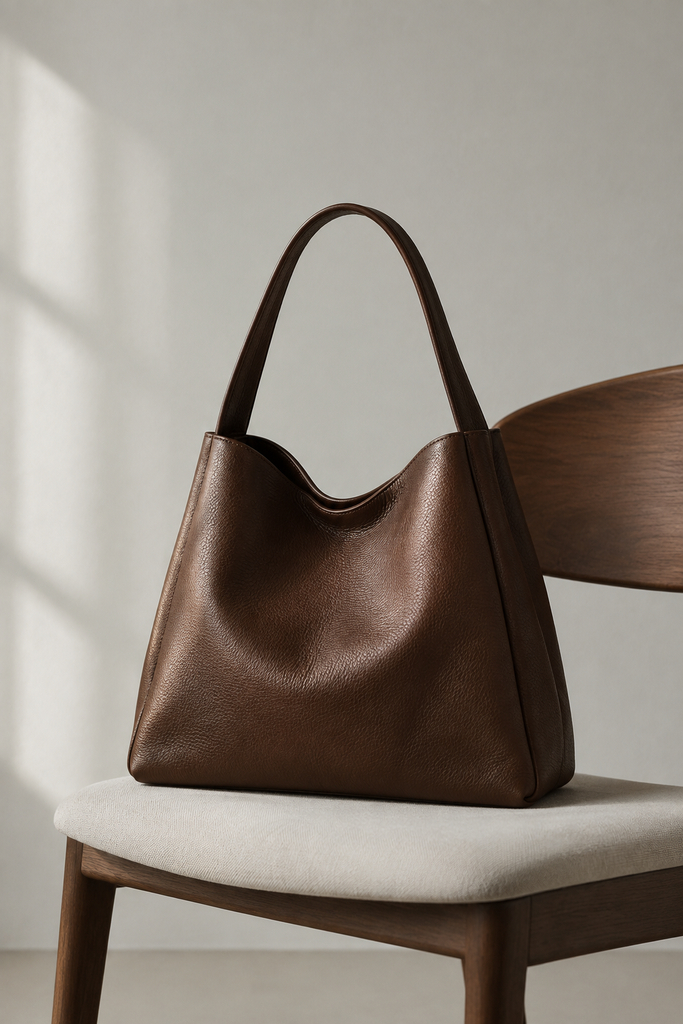
The logic is not hard to follow. When logos were scarce, they signalled money and access. When they became available to nearly everyone — through resale, rental platforms, fast-fashion imitations and a generation raised inside logo-heavy branding — they stopped meaning what they used to. Status, which always migrates toward whatever is hardest to copy, moved off the surface and into the silhouette.
The Row is the cleanest case study. Its Margaux became a cult object precisely because it refuses to participate in logo culture: no hardware theatrics, no obvious branding, just exceptional leather and a quietly recognizable shape. “In an industry that once equated visibility with value, The Row has flipped the equation entirely,” one industry account puts it. Reports that the original model is quietly being retired have only tightened its grip on the resale market — a scarcity move that deepens the effect.
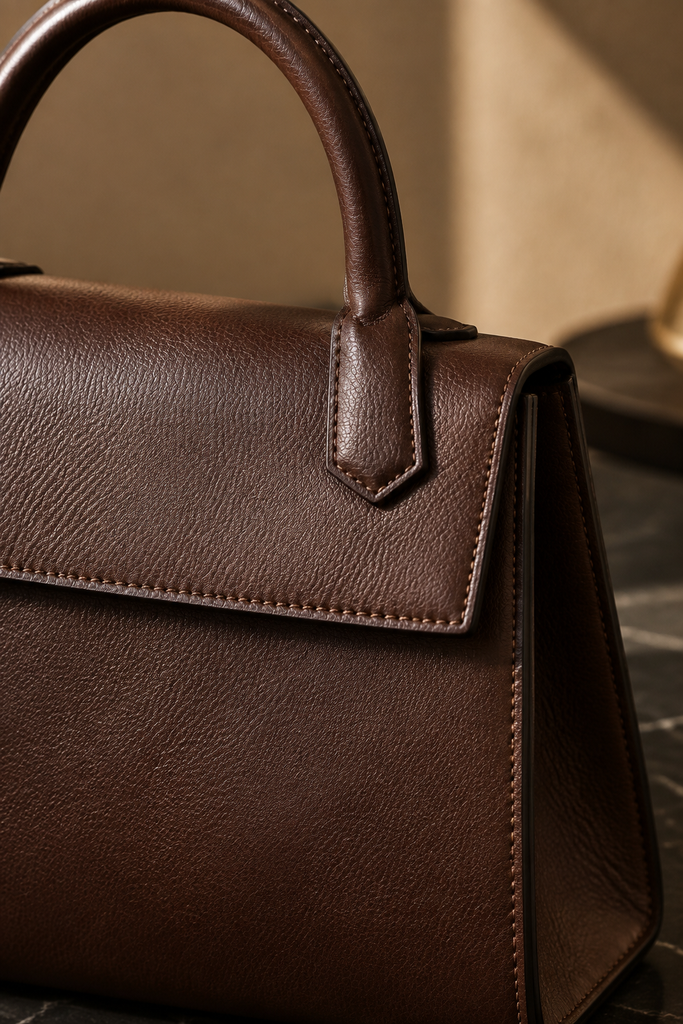
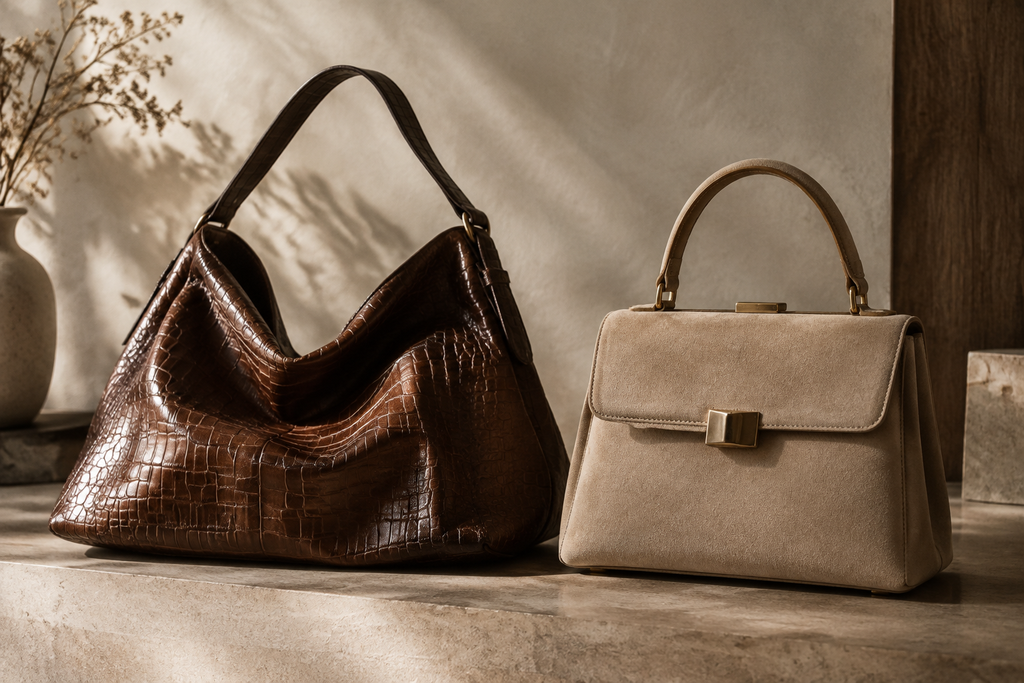
The fall 2026 bag lineup shows the same logic spreading across price points. It splits into two moods, and neither one shouts. There is the soft, slouchy bag — relaxed hobos and oversized totes that collapse against the body — and the structured top-handle or frame bag, with its vintage, ladylike polish. What unites them is finish over branding: croc-embossed leather, suede, woven intrecciato. “Customers are investing in bags that have a distinct point of view, whether that’s through texture, shape, or craftsmanship,” says Shopbop’s senior fashion director, naming exactly the three things a logo used to stand in for.
This is not minimalism, and it is worth being precise about that. A quiet bag is not a plain bag. It is a bag whose value is legible only to people who know what they are looking at, which makes it the most insider status signal of all — recognition through proportion and material rather than a printed name. That also means it reads unevenly. In a fashion-dense city, an unbranded bag can do more social work than any monogram; in a room where nobody recognizes the shape, it does none. For some wearers, being unreadable to strangers is the entire appeal; for others, it is the reason to buy something else.
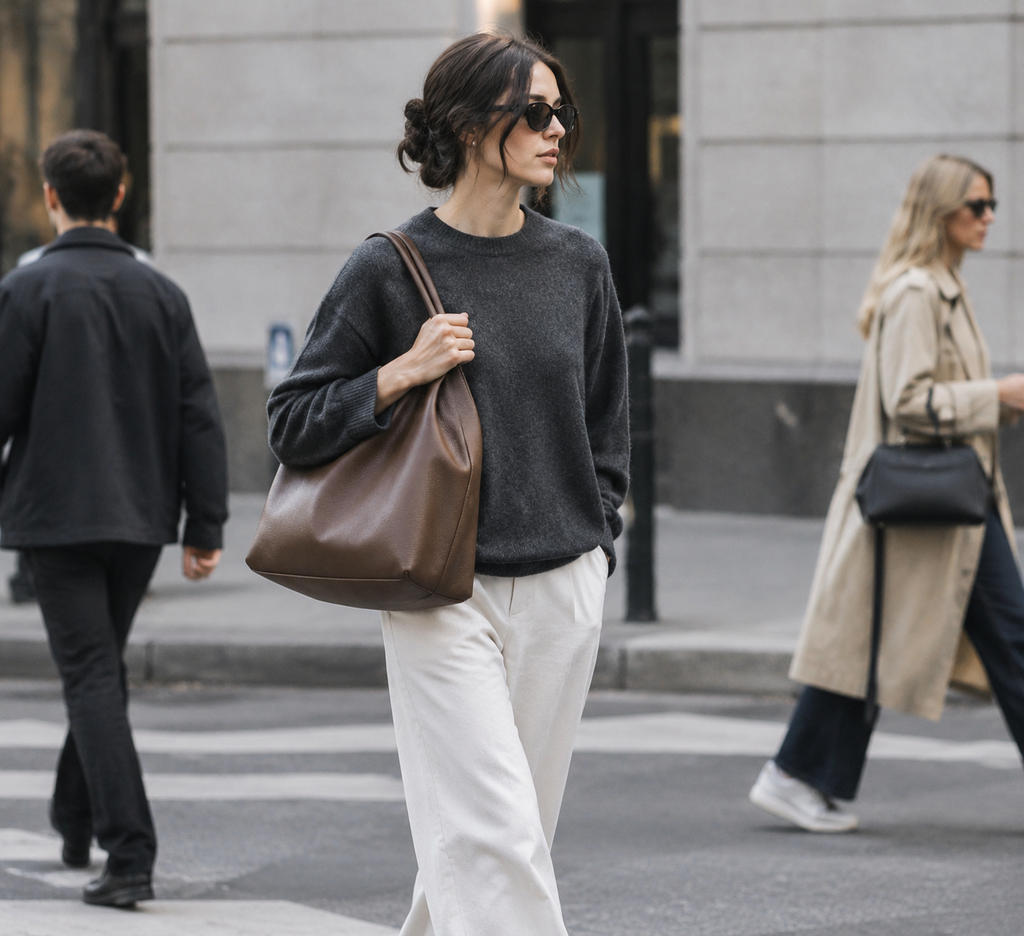
The trend travels across bodies and routines more gracefully than most. A slouchy tote suits someone carrying a laptop and a change of shoes; a structured top-handle suits an occasion that needs polish without a dress code. Bags have long been one of the few categories where gender expression moves freely, and the quiet bag leans into that — the signal is in the proportion, not in whether a style is “for” anyone in particular.
What should a reader actually do with this? The resale market is already pricing the shift. Logo-free pieces — Bottega Veneta’s Andiamo, Loewe’s Puzzle, The Row’s line — are holding value at or near their retail price, while many logo-heavy styles move slower. But the point is not “buy quiet bags as an investment.” It is that the modern status signal has relocated to the eye: a bag now says more about whether you can read proportion, material and finish than about how much you spent. Cost per wear and resale value are downstream of that ability, not substitutes for it.
The status bag stopped shouting because shouting stopped being a signal. What it says now is quieter, harder to copy, and — for anyone who knows how to read it — much louder.