


Fit Is the New Value Test: Why 2026 Fashion Has to Solve the Size Problem
Fashion's most persuasive luxury word in 2026 may not be rare, archival or exclusive. It may be fit. After years of price increases, online discovery, size-chart guesswork and returns culture, shoppers are beginning to judge clothes by a less glamorous but more intimate standard:
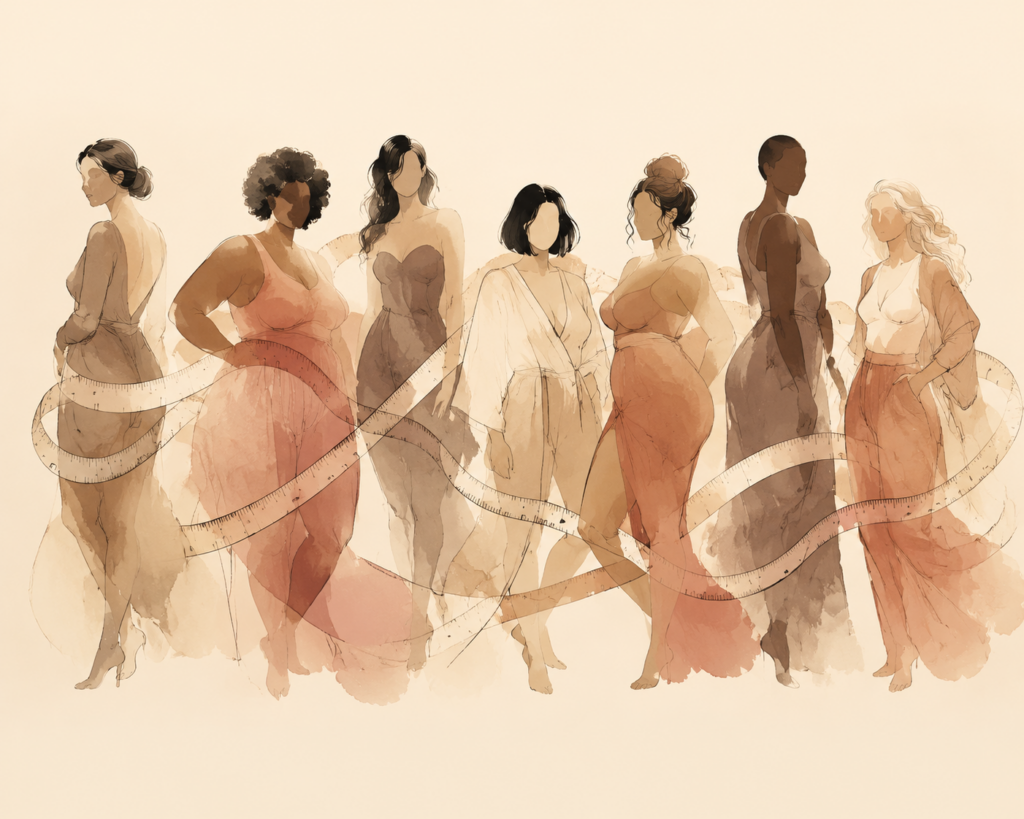
Fashion’s most persuasive luxury word in 2026 may not be rare, archival or exclusive. It may be fit. After years of price increases, online discovery, size-chart guesswork and returns culture, shoppers are beginning to judge clothes by a less glamorous but more intimate standard: whether a garment understands the body it is asking to dress.
This is not a retreat from style. It is a correction to the idea that style can be separated from the physical experience of wearing clothes. A jacket that looks expensive but pulls across the upper arm, a dress that fits the bust but gaps at the waist, or trousers that work only when standing still are no longer small inconveniences. They are evidence that the product has failed one of fashion’s most basic promises.
The timing matters because the economics around fit are becoming harder to ignore. MarketWatch reported in October 2025 that U.S. retailers expected returns to reach 15.8 percent of sales in 2025, worth about $849.9 billion, as free returns became more difficult to sustain. Vogue Business, writing in November 2025, pointed to poor fit and inconsistent sizing as major deterrents to apparel purchase, with ill fit described as a leading cause of returns in its cited consumer sizing research. The numbers turn a private fitting-room frustration into a business problem.
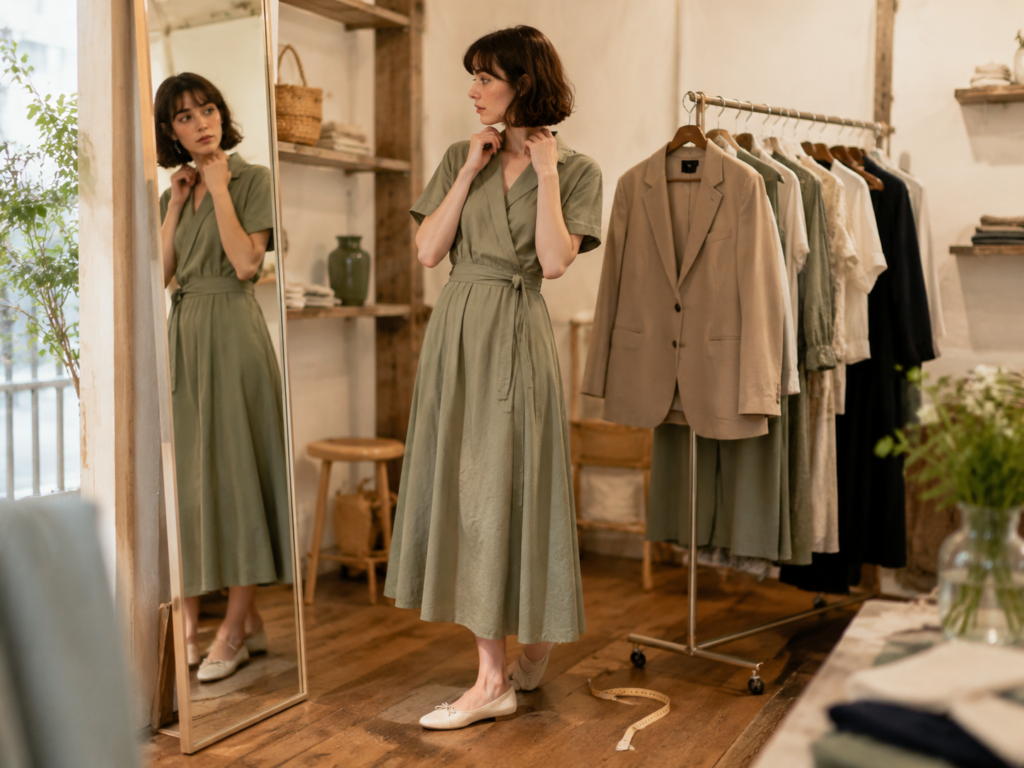
For shoppers, the issue is not simply choosing the wrong size. The deeper problem is that size has become a weak language. A medium can mean relaxed in one shirt and restrictive in another. A size 12 can be drafted from a different block, fabric, stretch ratio or brand assumption than the last size 12 a customer bought. Even within a single retailer, consistency can erode when collections are produced quickly, across many suppliers, with different fabrics and fit models.
That inconsistency affects people unevenly. Petite shoppers may find sleeves, rises and shoulder points scaled as afterthoughts. Tall shoppers often face hems and torsos that stop too soon. Plus-size and curve-friendly customers may be offered a larger version of a straight-size pattern rather than a garment properly developed for different proportions. Disabled, neurodivergent or sensory-sensitive shoppers may rely on online ordering because physical retail can be inaccessible or overwhelming. Gender-fluid dressers may use size systems never designed with their bodies or style expression in mind. When returns are punished without fixing sizing, the cost is pushed onto the people least served by the standard rack.
This is why the return-policy debate has become a fashion debate, not only a logistics debate. The Guardian reported in June 2025 on complaints from Asos customers whose accounts were closed under a “fair use” returns policy, with some shoppers arguing that inconsistent sizing forced them to order multiple sizes. Retailers have a legitimate need to manage fraud, shipping costs and waste. But a stricter return system cannot be the only answer when the product information and fit consistency remain unreliable.
The more constructive shift is to treat fit as product quality. That means measuring success beyond whether a garment sells in the first week. A brand should know whether a trouser is frequently returned because the waist is too tight, the fabric bags at the knee, the rise does not suit seated movement, or the size chart fails to explain stretch. Returns data, customer reviews, garment measurements and fabric behaviour are not after-sales noise. They are design intelligence.
Technology can help, but only if it moves upstream. Many fit tools ask the customer to solve the problem by entering height, weight, preferred size or body scans. That can be useful, but it also creates friction and privacy concerns. The more important question is whether brands can make the garment more predictable before it reaches the product page. Vogue Business covered Fit Collective, an AI-led startup using returns, fabric and sizing data to help brands understand where garments fail. The significance is not that AI has magically solved fit. It is that fit is finally being treated as a data-rich design and production issue rather than a customer’s personal problem.
For luxury, fit has an even sharper implication. Bain’s 2026 luxury forecast, covered by Vogue, described consumers as more demanding about service, value and product substance after a period of pricing pressure. In that context, a beautiful garment that requires expensive alteration before it feels wearable weakens the value proposition. Craftsmanship is not only embroidery, leather finishing or heritage storytelling. It is also the quiet accuracy of a shoulder line, a waistband, a sleeve pitch and a size range that respects more than one body.
The resale market reinforces this point. Clothes with clear measurements, stable construction and adaptable proportions are easier to buy secondhand, easier to alter and easier to keep in circulation. A garment that only works on one narrow fit assumption has a smaller afterlife. In 2026, wardrobe value is not only about what a piece costs new. It is about how many bodies, seasons and life changes it can realistically survive.
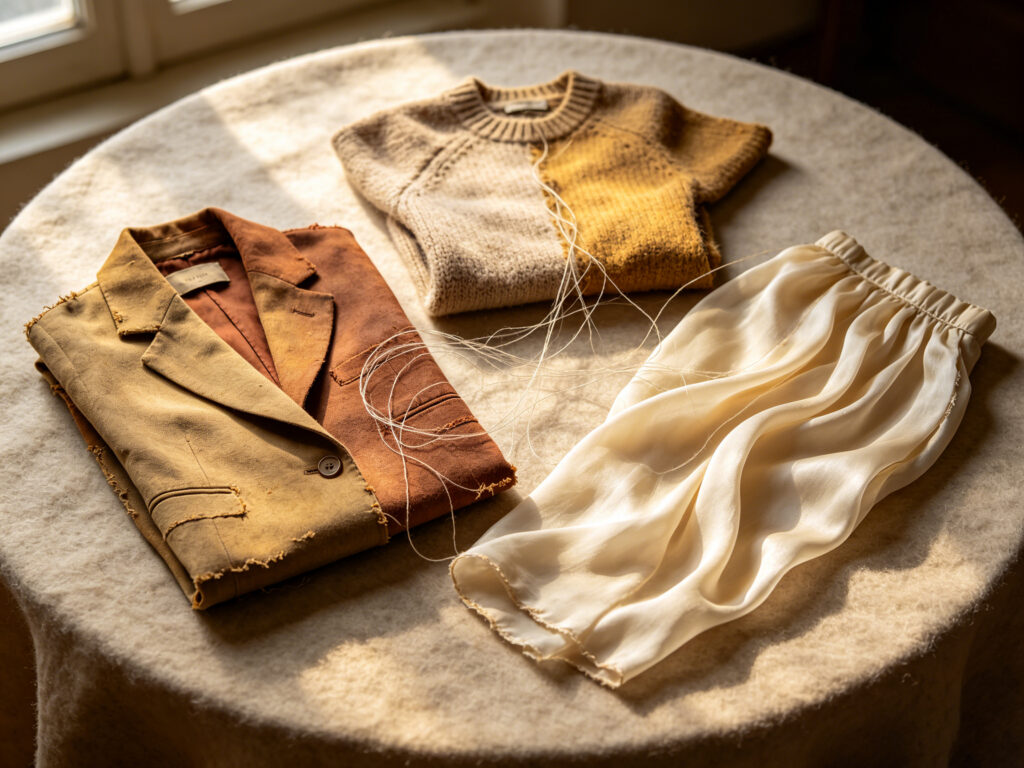
For readers, the useful takeaway is practical: fit is not vanity, and it is not a flaw in the body. It is evidence. Before buying, ask whether the brand gives garment measurements, whether reviewers mention consistent fit, whether the fabric has recovery, whether the garment works when sitting and walking, and whether alterations would be simple or structural. A piece that nearly fits but asks too much emotional or financial labour may not be a bargain, even on sale.
The future of fashion value will not be decided only by trend reports or runway silhouettes. It will be decided in the fitting room, in the return portal, at the tailor’s table and in the moment a shopper chooses whether to keep wearing something or send it away. Newness can create desire. Fit creates trust. And in a market where shoppers are more selective, trust may be the most expensive material of all.