


Sandals Are the New Style Test: Why Summer 2026 Footwear Has to Prove More Than Taste
The sandal used to be the easiest part of a summer outfit. It was the thing you put on after the dress, the linen trouser or the swimsuit had already made the style decision. In summer 2026, that hierarchy feels less convincing. The season's
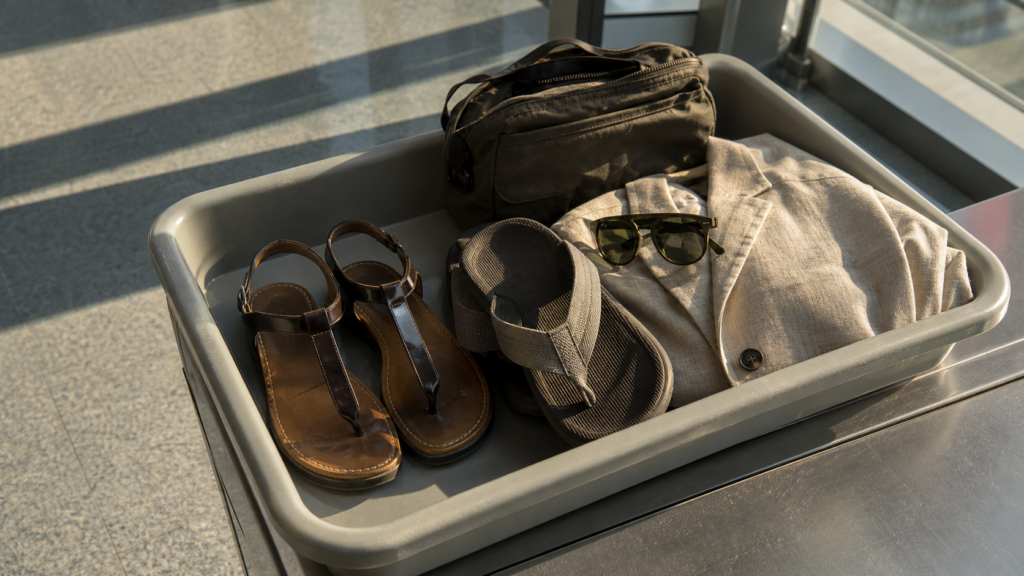
The sandal used to be the easiest part of a summer outfit. It was the thing you put on after the dress, the linen trouser or the swimsuit had already made the style decision. In summer 2026, that hierarchy feels less convincing. The season’s sandals are doing too much work to be treated as an afterthought: they have to survive hot pavement, airport terminals, office-adjacent dress codes, long restaurant evenings, rainy commutes and the blunt reality that many readers now expect one pair of shoes to solve several lives at once.
That is why the most interesting sandal story this year is not a single shape. It is not only the flip-flop, the T-strap, the jelly flat, the beaded sandal or the wedge. The real shift is that open footwear has become a test of fashion judgment. A good sandal now has to answer three questions at the same time: does it express taste, does it work on a real body in real weather, and does it justify its space in a smaller, more value-conscious wardrobe?
Vogue’s June 2026 sandal coverage makes the variety hard to miss. Its trend list moves from beaded flats and sporty thongs to minimalist flats, colorful sandals, jelly styles, hardware details and woven mules. That range matters because it shows how far summer footwear has moved from the old binary of either beach-casual or evening-sexy. The category now includes irony, polish, utility, craft and nostalgia all at once. Vogue’s separate June 10 piece on the T-strap sandal adds another clue: even the quietest shape is being recast as a deliberate alternative to the louder flip-flop and wedge conversation.
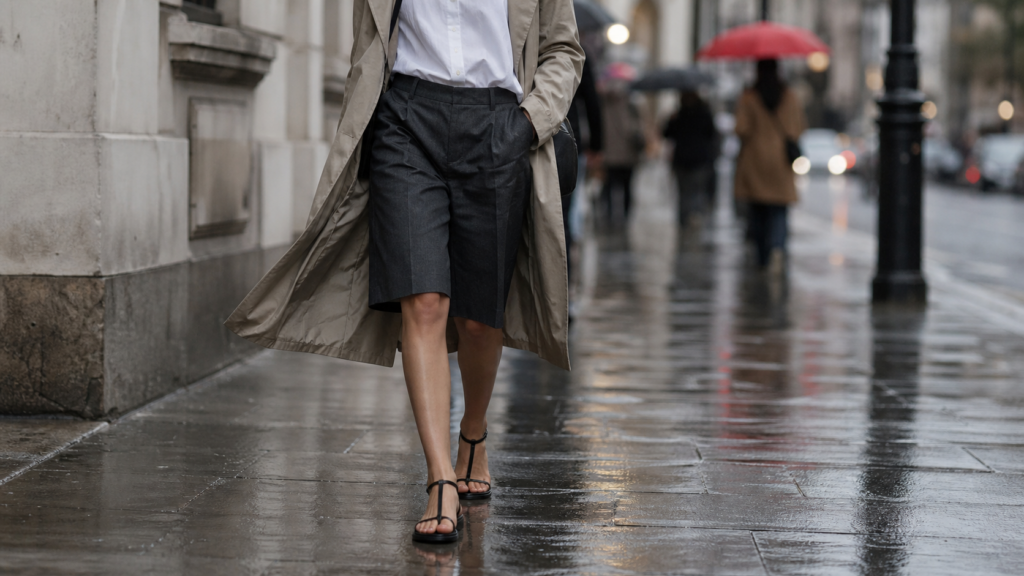
The T-strap is useful because it explains the season’s new restraint. It is barely there, but not careless. It can make a cotton dress feel less sweet, soften a tailored short, or give a slip skirt an ease that a pump would make too formal. On narrow feet, wide feet, high arches or flatter feet, the same visual idea may require very different engineering: strap width, toe-post comfort, sole flexibility and ankle security become part of the look. That is where fashion imagery often fails readers. A sandal is not just a line on the foot; it is a small architecture that either supports the way someone moves or betrays them by lunchtime.
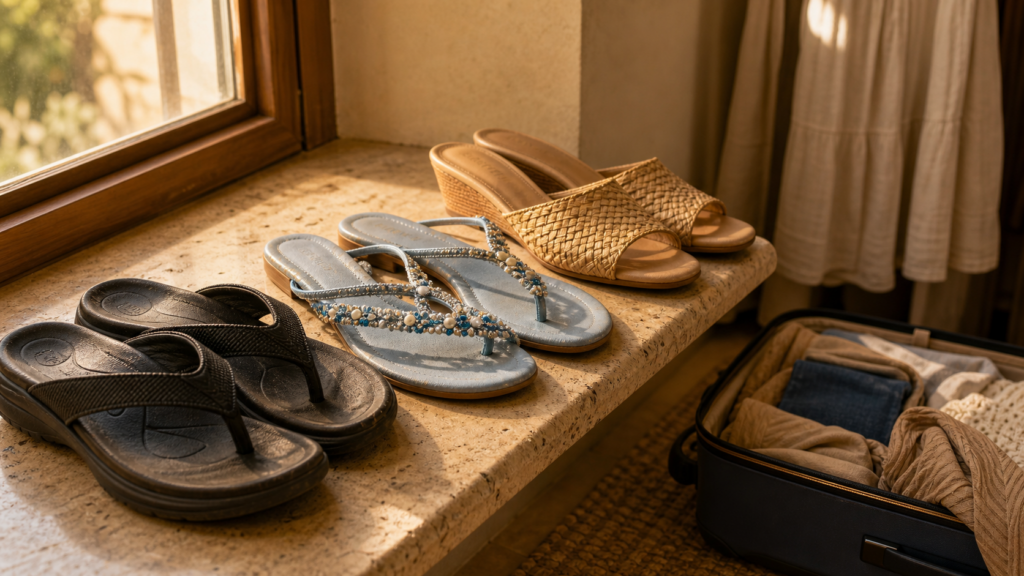
Flip-flops reveal the other side of the story. InStyle’s Los Angeles trend report, published June 10, frames flip-flops as part of a broader summer mood built around wearability: capris, low-slung denim, slim sneakers and open-toed sandals that feel relaxed rather than hyper-styled. But the flip-flop of 2026 is no longer only the rubber pair by the door. It appears in leather, jelly, platform, heeled and embellished versions. The point is not that a beach shoe became elegant overnight. It is that shoppers have become more fluent at reading small upgrades: a square toe, a cushioned footbed, a better strap, a quieter color, a material that looks intentional with trousers instead of accidental with a swimsuit.
This is also why comfort has become an aesthetic issue rather than a separate health note. People’s June 2026 podiatrist-led shopping story focuses on support features such as contoured footbeds, wide adjustable straps, arch support and deep heel cups. A fashion column should not turn medical advice into trend language, but it should notice the cultural change behind that coverage. Readers are no longer embarrassed to ask whether a stylish shoe can handle flat feet, swollen feet, long walks, uneven pavement or vacation sightseeing. The old fantasy was that discomfort proved commitment. The newer fantasy is more demanding: the shoe should look considered and let the day continue.
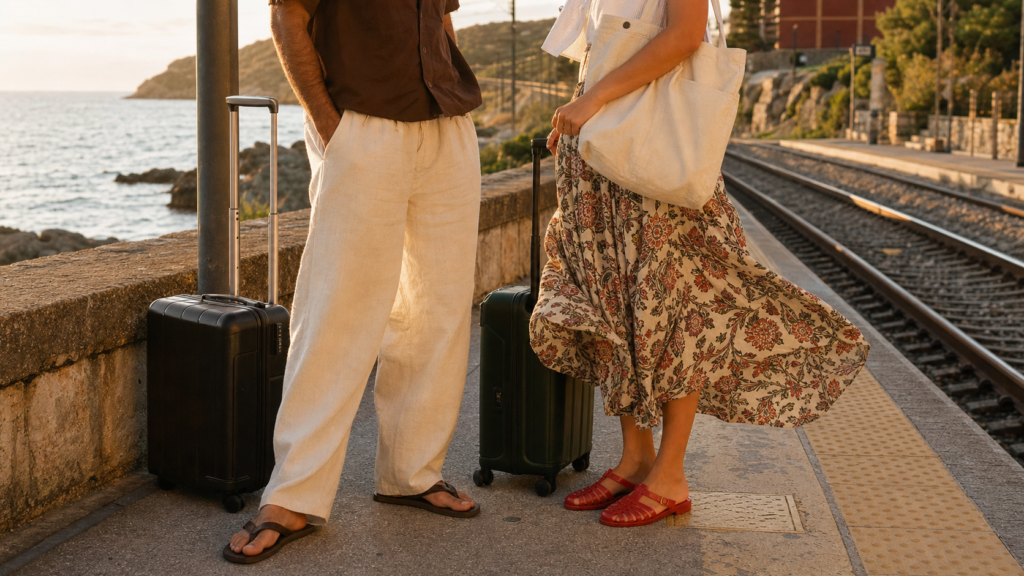
The global variation is important. A London reader may need a sandal that survives sudden rain and a train platform. A Los Angeles reader may treat flip-flops as year-round footwear but still want a version polished enough for lunch. A Singapore, Miami or Dubai reader has to think about humidity, swelling and materials that do not punish the skin. A Mediterranean holiday wardrobe may prioritize woven texture and bare-foot ease, while an office in Toronto or Berlin might allow a minimal leather flat only when the rest of the outfit is sharply controlled. The same sandal trend does not mean the same thing in every climate or dress code.
Body variation changes the conversation too. Thin straps can look delicate in photographs but dig into higher-volume feet. A platform may feel stable for one wearer and heavy for another. A toe-ring sandal can be elegant, but it may not work for every toe shape or walking pattern. A backless mule can make a simple outfit look refined, yet it may be impractical for anyone who moves quickly through a commute or school run. The useful question is not “Which sandal is in?” but “Which version of this idea respects the body that has to wear it?”
Three directions are worth watching. The first is polished minimalism: T-straps, clean leather thongs, slim flats and quiet wedges that make summer outfits look edited without becoming severe. The second is expressive surface: beads, jelly materials, hardware, raffia and color that let a simple dress or tank-and-trouser combination feel styled. The third is functional visibility: sporty thongs, molded soles and adjustable straps that no longer hide their practicality. In the best 2026 examples, function is not disguised; it is designed well enough to become part of the style.
For readers, the takeaway is practical but not boring. Start with the day, then choose the sandal. If the outfit has volume, a thinner sole or cleaner strap may sharpen it. If the outfit is minimal, a beaded, jelly or hardware style can supply personality without adding another layer of clothing. If the day involves heat and distance, the most elegant choice may be the pair with support, not the pair that photographs best on a carpeted floor. Cost per wear is not only about durability; it is also about whether the shoe works across the actual places a person goes.
The sandal’s rise in 2026 says something larger about fashion after years of trend fatigue. Shoppers are not rejecting novelty, but they are becoming harder to fool. A small item has to carry evidence: comfort, proportion, material, usefulness, memory, color, humor or craft. The best summer sandal is no longer the one that disappears under the outfit. It is the one that quietly proves the outfit can live in the world.