

The Scarf Is No Longer a Neck Warmer: How Fall 2026 Turned a Basic Into a Whole Outfit
For most of the last decade, a scarf was an afterthought: something you threw on before leaving the house, or worse, the chunky blanket-scarf that got bundled up to the chin and made every outfit look the same. Fall 2026 quietly reverses all of
For most of the last decade, a scarf was an afterthought: something you threw on before leaving the house, or worse, the chunky blanket-scarf that got bundled up to the chin and made every outfit look the same. Fall 2026 quietly reverses all of it. The scarf is being called the accessory of the year, but the label misses the point. The new scarf is not really a neck warmer at all. It is a piece of fabric doing the work of a new garment — a top, a belt, a headwrap, a collar, a layer of texture — for the price of an accessory. The scarf has become fashion’s cheapest way to change an outfit without buying more clothes.
The shift has two drivers, and they point in the same direction. The first is economic. After several years of shoppers treating every purchase as a cost-per-wear calculation, the appeal of one piece that can be worn five different ways is easy to explain. The second is aesthetic. The quiet-luxury neutral wardrobe solved the problem of looking cheap, but it created a new problem: looking the same as everyone else who bought the same palette. A scarf is the cheapest way to reintroduce color, pattern and proportion without breaking the capsule you have already built.
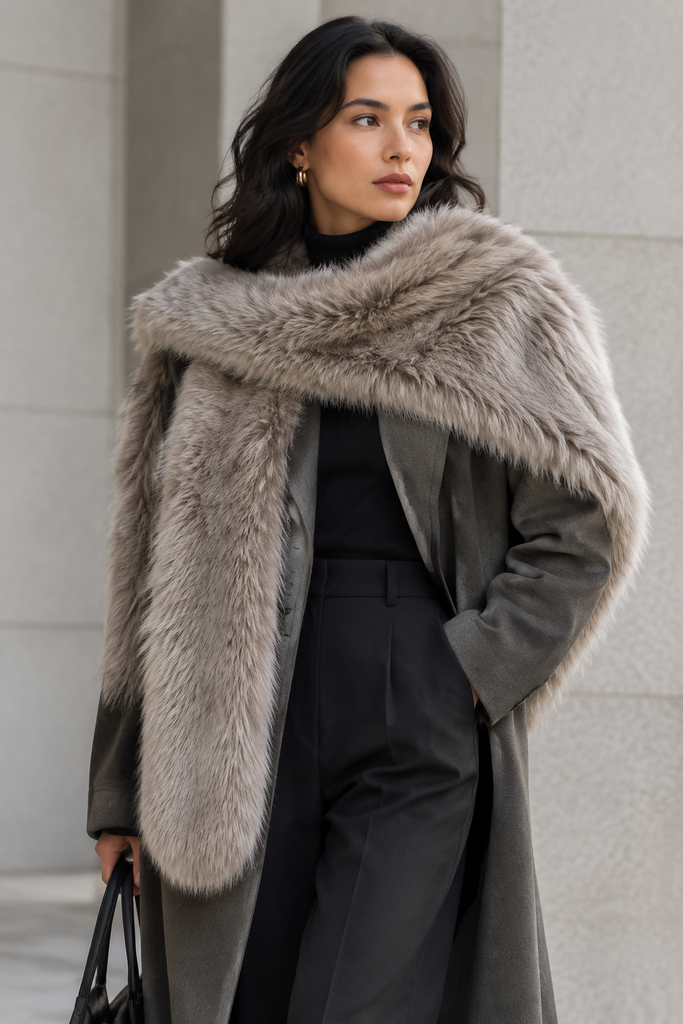
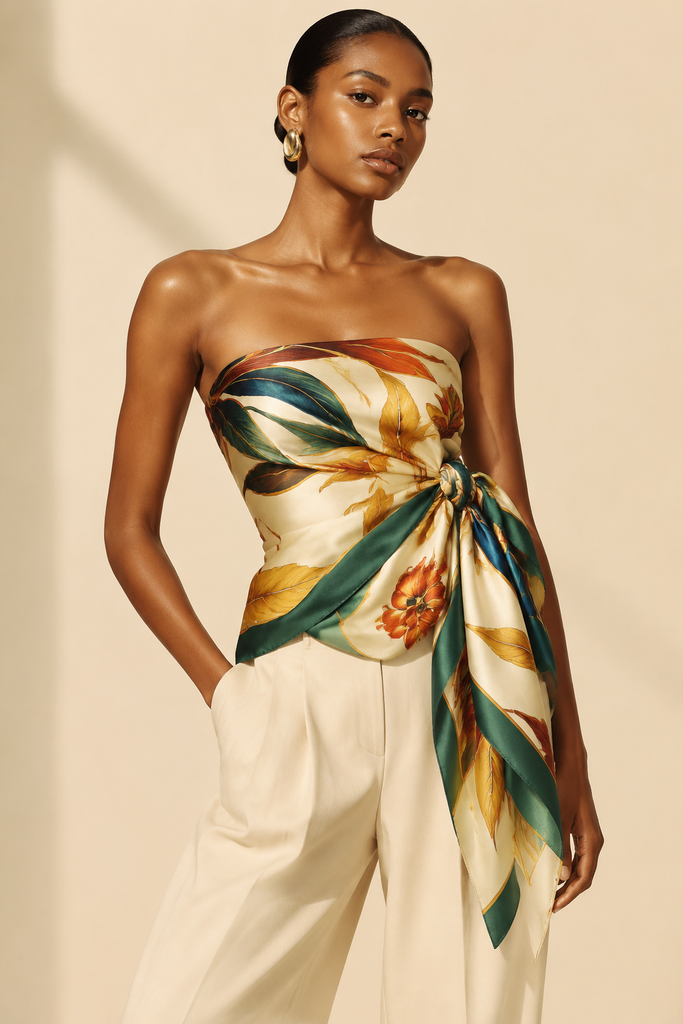
The clearest signal is the oversized silk scarf. On the fall 2026 runways, designers treated it as a focal point rather than a finishing touch: silk scarves wrapped and worn as tops at Altuzarra, cinched at the hip at The Row, tied bandana-style at Maria McManus, or used for full printed ensembles at Area. Faux-fur scarves, a winter 2026 trend first spotted at Chloé, Fendi and Anna Sui, do the same job with texture, draped over a tonal office look or a tailored coat. At the same time, the old way of wearing scarves has been declared dated. The bulky, fuzzy, high-contrast plaid blanket-scarf bundled tight around the neck is out, and the styling rule of the season is fluid, effortless drape rather than heavy knotting.
What makes the scarf unusual is that it is one of the few trends that scales across climates and bodies in a way a coat or a boot cannot. In London or New York it is a real layer against the wind; in a warmer Southern California or Mediterranean autumn it is a light drape or a headwrap; in a heavily air-conditioned office it is the layer you can add and remove without changing the rest of what you are wearing. And because it has no size, it does not carry the fit anxiety of trousers or jackets — a square of silk accommodates a wider range of bodies than a tailored garment can.
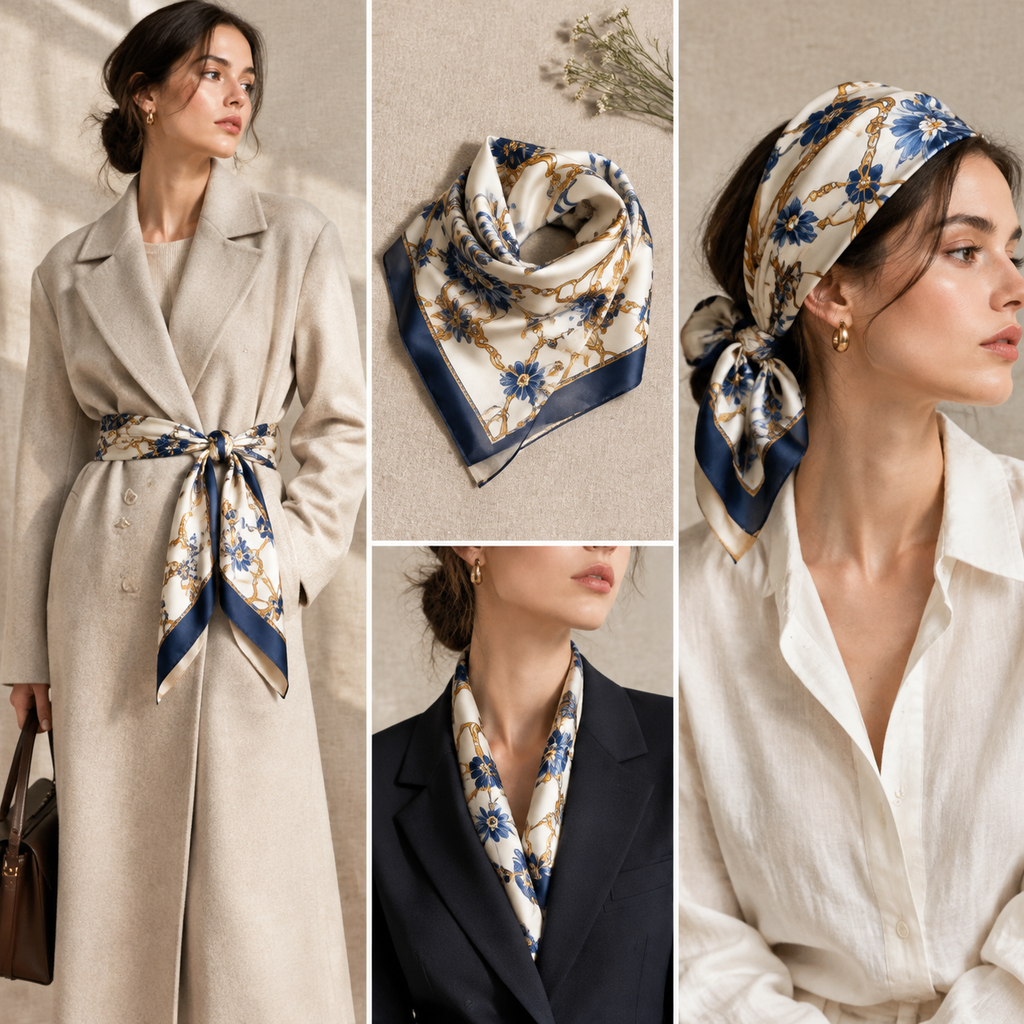
Three ways of wearing it capture where the trend is heading. The first is the scarf as a top or bodice, the boldest version, for evenings or warmer days. The second is the scarf as a belt or hip detail, cinching a dress, a long coat or a pair of wide trousers to change the proportion without a single new piece. The third is the quietest and most useful: the scarf as a collar or neckline, tucked into a blazer or trench, putting a point of color or pattern close to the face. At the smaller end, a skinny silk band or a thin ribbed knit does the same job with less fabric.