


The Turtleneck Is Back — and It Finally Has to Earn the Neck
For years the turtleneck was the garment fashion treated as a default, not a decision — the thing you reached for when you needed warmth and did not want to think about your outfit. Fall/Winter 2026 has changed that. The turtleneck is back at
For years the turtleneck was the garment fashion treated as a default, not a decision — the thing you reached for when you needed warmth and did not want to think about your outfit. Fall/Winter 2026 has changed that. The turtleneck is back at the centre of the conversation, called „winter’s unsung hero“ by Vogue and „the new go-to“ by Who What Wear, and it is everywhere on the runways. But this is not a nostalgic return to a preppy uniform. The turtleneck has come back as something more demanding: a single knit that does the work of a base layer, a scarf and a statement all at once — and that turns the neck, a part of the body fashion ignored for years, into a silhouette.
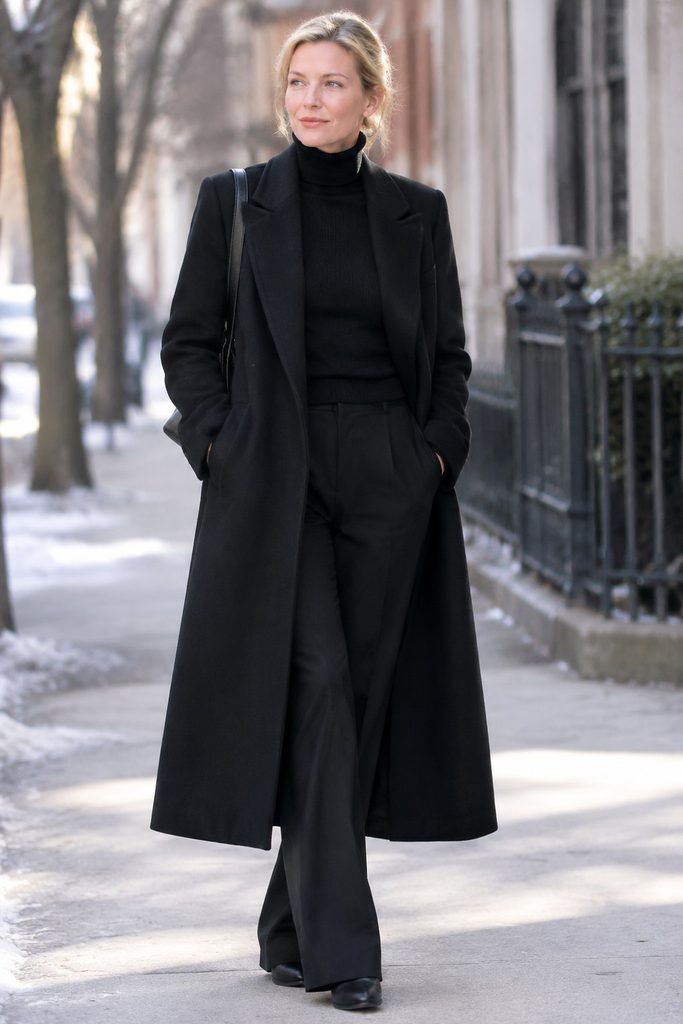
The reasons are legible. First, the ’90s are back: the minimalism of Carolyn Bessette-Kennedy — a fine black turtleneck, straight trousers, a long coat — has returned as the template for „effortless,“ and the turtleneck is its single most recognisable piece. Second, the pendulum that has been moving away from oversize and back toward definition has reached the neck: after years of open collars and bare throats, a covered neck now reads as intentional rather than uptight. Third, the economic mood rewards garments that do several jobs, and a turtleneck is exactly that — one piece that layers, warms and finishes an outfit without a second thought.
On the runways the turtleneck appeared in two distinct registers. The first is the quiet version: Celine’s Michael Rider layered fine turtlenecks under leather jackets and collarless coats, and Calvin Klein’s Veronica Leoni revived a sculptural, snood-like neckline in her Bessette-Kennedy minimalism. The second is the loud version: Proenza Schouler showed fire-engine red, and the „contrasting turtleneck“ — a punchy-coloured or sheer turtleneck layered beneath a neutral coat or blazer, seen at Tory Burch, Ashlyn and Zankov — became the season’s signature styling trick. Jennifer Lawrence’s head-to-toe Khaite look, a sculptural black turtleneck with cropped trousers and delicate gold jewellery, made the case that the garment is now a statement in its own right.
The turn toward the neck is where the argument gets interesting, because the neck is not neutral territory. It is the one part of the body many people actively dislike having covered — a constricted throat reads as comfort for some and mild panic for others. This is why the modern turtleneck has had to soften. The fine-gauge merino roll neck has replaced the stiff, strangling knit as the default, and the mock neck — a lower, looser band that suggests the look without touching the throat — has become the compromise that lets the trend travel to people who would never wear a full roll. The funnel-neck cardigan does the same work from the other direction. Covering the neck has become a choice with a spectrum, not a single strict uniform.
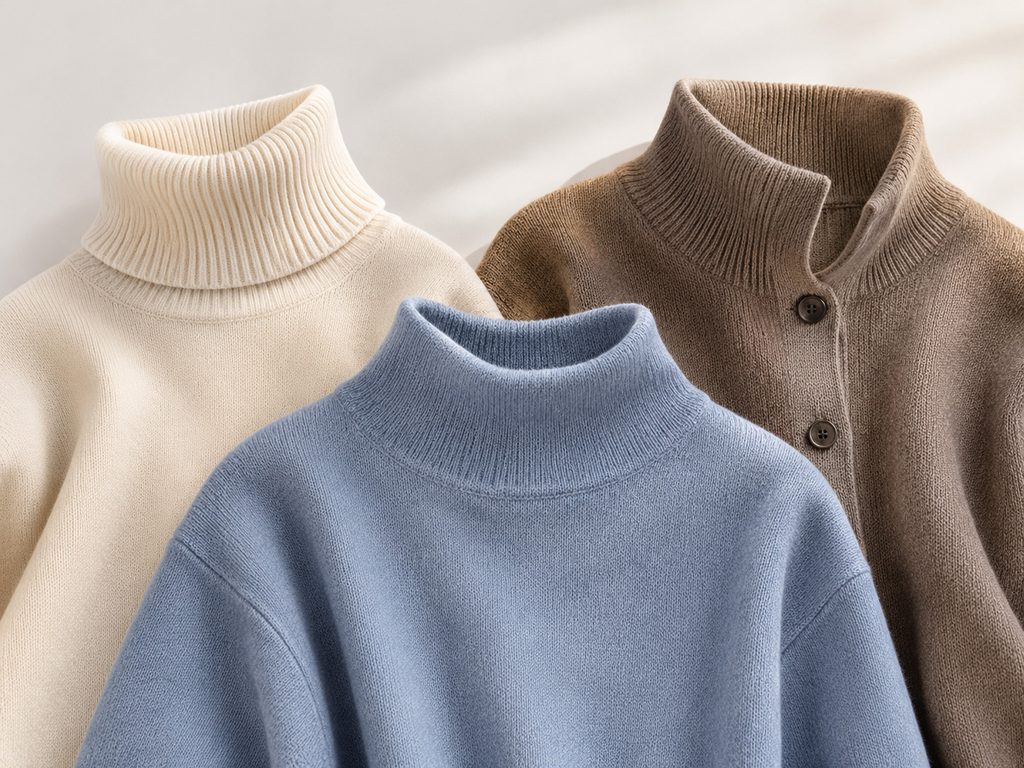
That spectrum is also why the trend scales across climates and bodies. In a cold Northern European or North American winter, a fine turtleneck is a genuine thermal layer under a coat; in a milder Southern European or coastal autumn, a sleeveless or short-sleeved mock neck gives the neckline the same intention without the warmth. Colour matters too: a dark turtleneck — black, navy, chocolate — frames the face and works across skin tones the way a dark scarf does, while a bright or pastel one draws the eye upward. And the move is ageless and gender-fluid: menswear has worn the roll neck for a century, from the Beat poets to Steve Jobs, so it carries none of the „feminine“ or „fussy“ weight that other comeback pieces do.
In practice the neck can be worked three ways. First, as a base layer under tailoring: a fine turtleneck under a blazer or a button-down winterises the pieces you already own and costs nothing beyond the one knit. Second, as the statement: a contrasting turtleneck — chartreuse, watermelon, or a sheer version — under a neutral coat or blazer turns a simple outfit into a deliberate one. Third, as the soft base: a fine merino or cashmere roll neck worn alone, with straight trousers or a skirt, is the entire outfit, and the kind of thing you reach for when you want polish without effort.
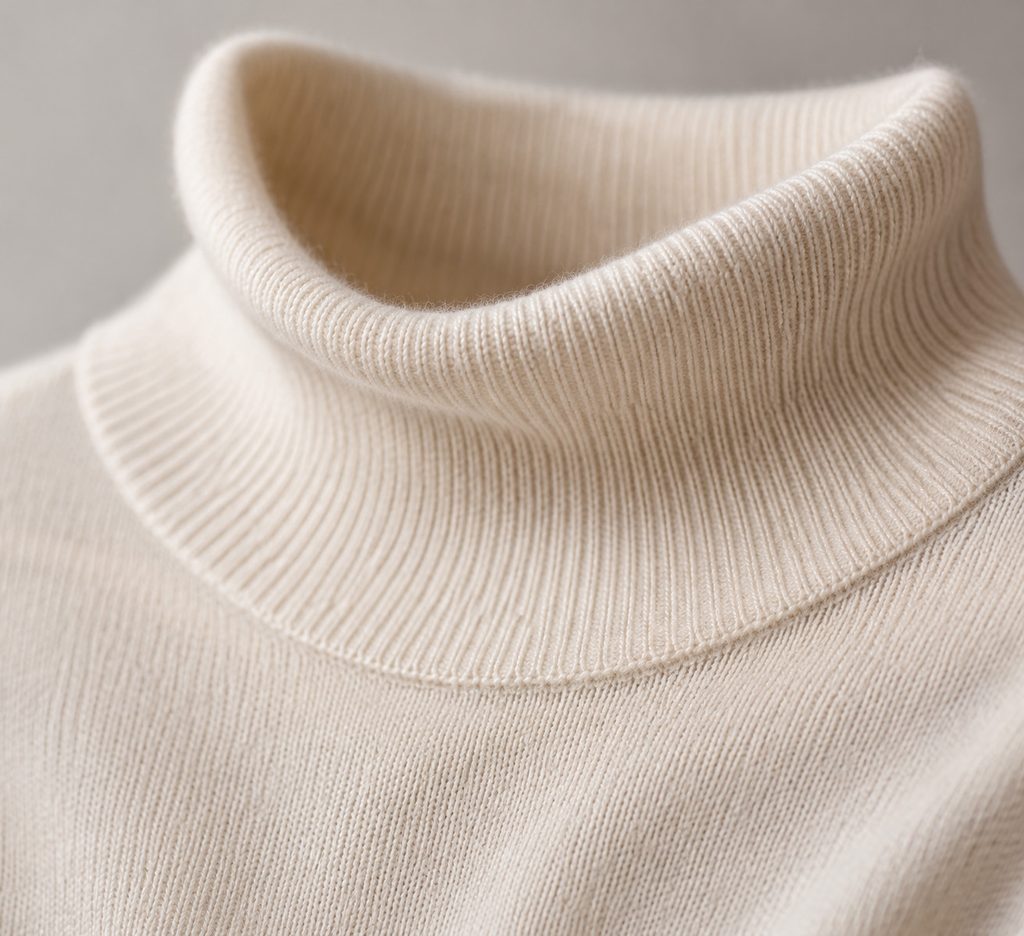
The practical takeaway is the reason this trend will outlast the season. A turtleneck is a scarf you cannot lose, a base layer that does not show, and a collar you do not have to iron — three small frictions removed by one garment. Because it earns its price through dozens of wears from October to March, it is one of the rare trend pieces whose cost-per-wear math is unambiguously good. Put it in one line: the cheapest way to look more intentional this winter is to cover your neck.
The turtleneck’s return is easy to misread as nostalgia for a piece that never really left. It is closer to the opposite: a garment that had been treated as a default is now being treated as a decision. Fashion found the neck again this season, and for once it asked the neck’s permission first.