


Fashion Found the Waist Again — With a Belt, Not a Body Standard
For most of the past decade, the waist was the part of the body fashion politely ignored. Oversize coats swallowed it, boxy knits skimmed over it, and "comfortable" usually meant "undefined." Fall/Winter 2026 has quietly reversed that. The waist is back at the centre
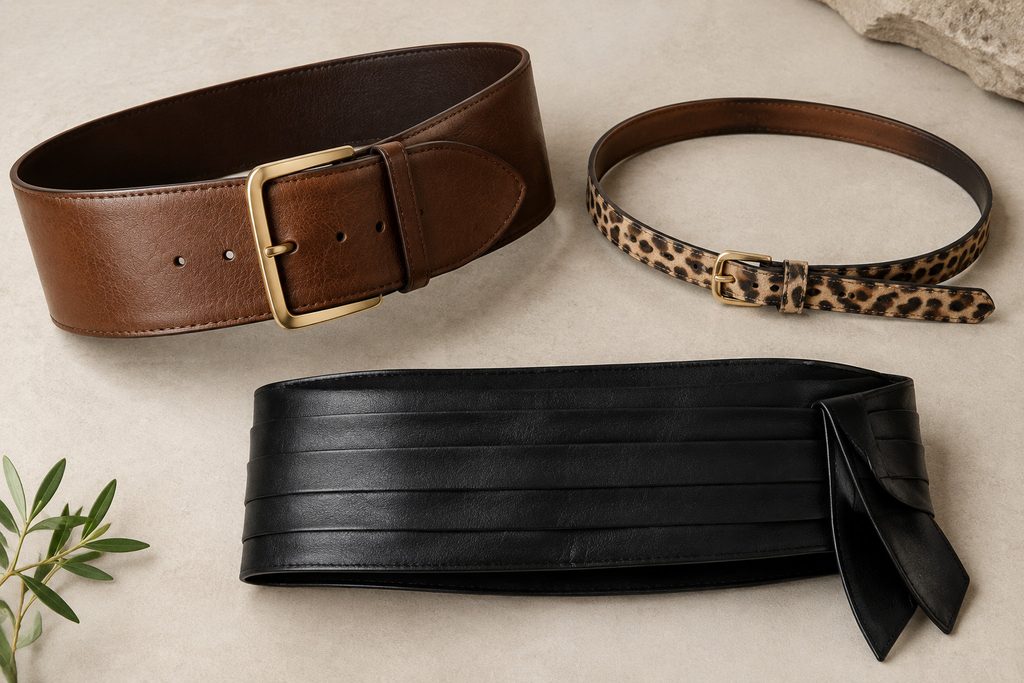
For most of the past decade, the waist was the part of the body fashion politely ignored. Oversize coats swallowed it, boxy knits skimmed over it, and “comfortable” usually meant “undefined.” Fall/Winter 2026 has quietly reversed that. The waist is back at the centre of the silhouette — but not the way it came back in earlier eras. This is not a return to corsets, shapewear or a body cinched into submission. It is a styling move: a belt thrown over a coat, a chunky knit or a trench, turning a soft, shapeless layer into a deliberate outfit. The most telling detail of the season’s biggest silhouette shift is that it can be made with a piece most wardrobes already own.
The change is part of a wider correction. After years in which oversize was the default — the bigger the coat, the more “fashion” it signalled — the pendulum has swung back toward structure, proportion and a visible line through the middle of the body, a shift editors have been describing as “oversize is over.” But there is an economic logic underneath it too. After a long stretch of cautious spending, shoppers are drawn to changes that cost nothing, and a belt is exactly that: a way to re-cut the clothes already hanging in the wardrobe. It is also a quiet answer to trend fatigue, because it updates what you own rather than demanding something new.
On the runways the move showed up in three places. First, the belted coat: Saint Laurent cinched a camel robe coat, Dries Van Noten put a skinny printed leather belt over a trench, and Prada closed a field jacket with a simple fabric belt. Second, the fitted waist moved inside the garment itself — Dior and Genny’s redingote coats, and the wider peplum revival, are cut with the waist built in, their hems flaring below it in a Regency silhouette. Third, the belt crossed into pure ornament: the “useless belt” and the cummerbund, worn loose at the hip or layered over a knit for structure alone, were called out as the season’s hero accessories, a move some have nicknamed “waistmaxxing.”
What makes the return of the waist unusual is how democratic it is. Climate is the easy part: in a cold Northern European or North American winter, a belt over a heavy coat does the same quiet job as a scarf, holding warmth at the middle; in a milder Southern European or coastal autumn, a belt over a knit or a shirt-dress is the whole look. Bodies are where it matters more. Because you place the belt yourself, it defines a waist on any body instead of asking a body to fit a garment’s fixed waistline — which is why it reads as size-inclusive rather than restrictive. A slim belt avoids cutting a petite frame in half, while a wide belt marks proportion on a taller or curve-friendly build. Colour is a small, low-risk decision: a tonal belt lengthens the line, a contrasting one — black over camel, red over black — draws the eye, and because the surface is small, almost any shade sits comfortably across skin tones. The move is also ageless and gender-fluid: menswear has embraced it as readily as womenswear, because belting is about proportion, not femininity.
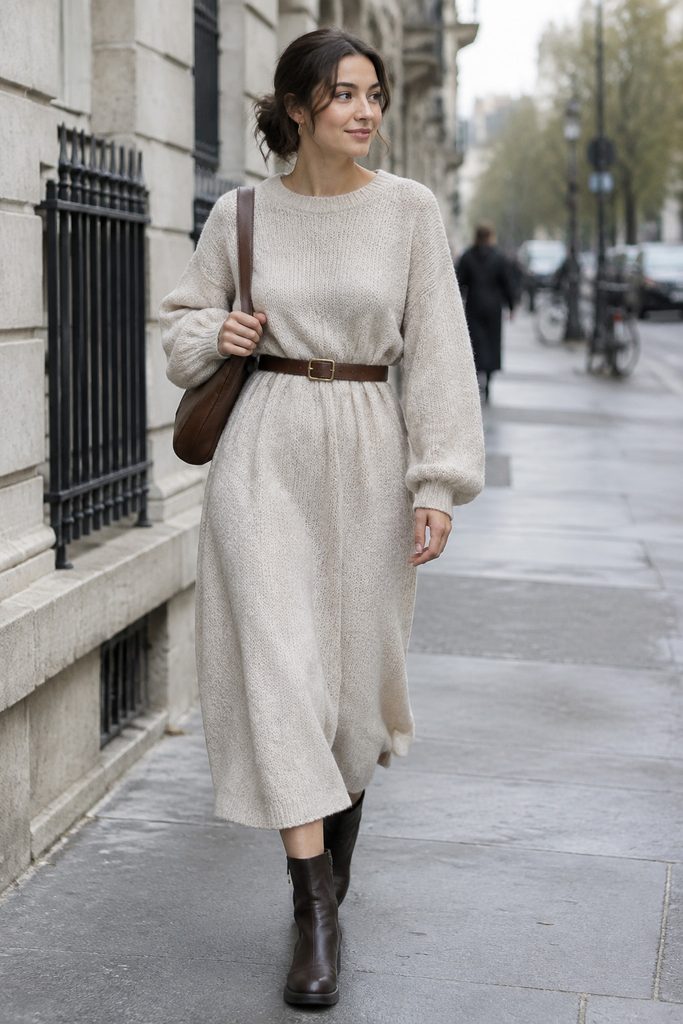
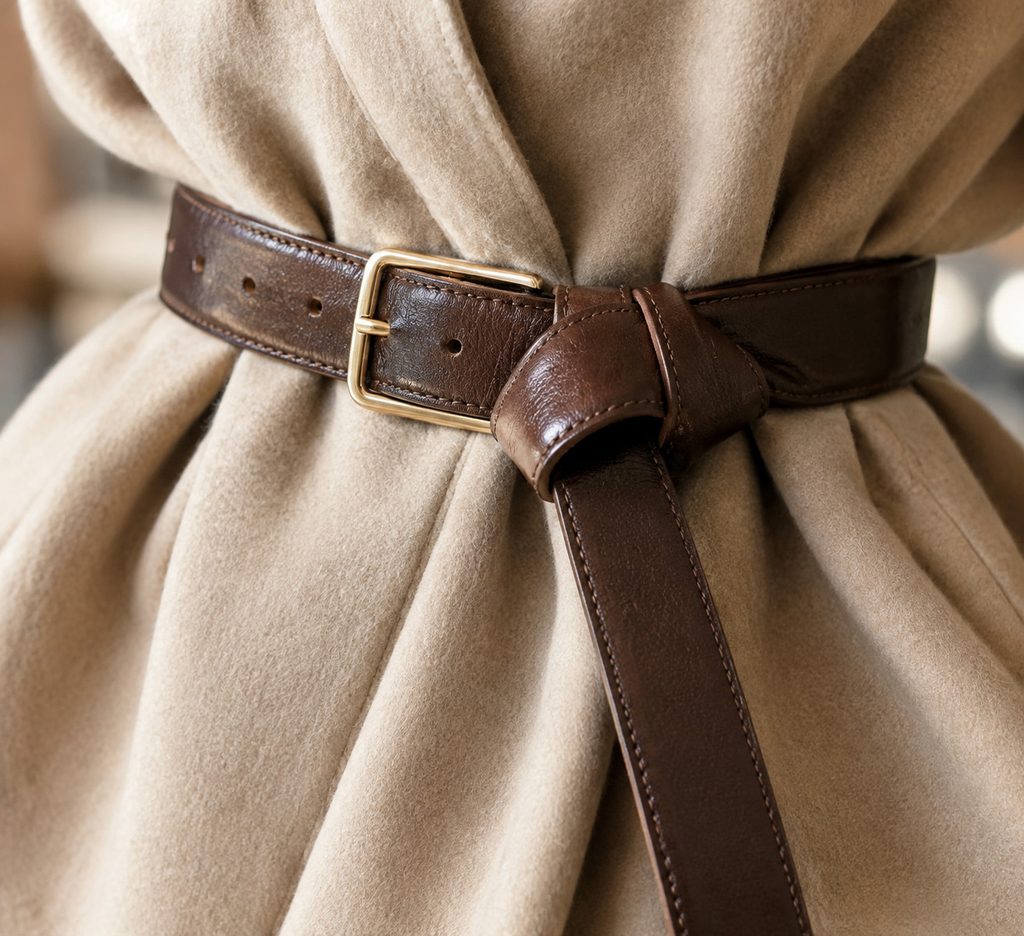
In practice the waist can be found three ways. The first is to belt the coat: cinch a straight or robe coat at the middle to turn a rectangle into an hourglass, and tie the belt in a knot rather than a bow for a crisper finish. The second is to belt the soft layer — a chunky knit, a slip dress or an oversized shirt-dress — where the belt marks the waist without any compression. The third is the purely decorative belt: worn loose at the hip or over a jacket as ornament, it adds structure without a single millimetre of squeeze. In every version the rule is the same: let the belt supply the definition, and keep everything around it soft.
The practical takeaway is the reason this trend will outlast the season. A belt is the cheapest wardrobe update there is — cheaper than a new coat, a new knit or a new pair of boots — because it re-cuts clothes you already own and lowers the cost per wear of everything it touches. It is the rare silhouette shift that adds intention without asking anyone to change their body or spend a thing. Put it in one line: the season’s most useful new silhouette is one you can make with a belt you already own.
The return of the waist is easy to misread as a return to restriction — a retreat into the era of corsets and shapewear. It is closer to the opposite. Belting gives structure, proportion and intention to clothes that are already soft and comfortable, which is quiet proof that “polished” and “easy” stopped being opposites somewhere along the way. Fashion found the waist again this season, and for once it did it without asking anyone to be smaller.