


Paris Haute Couture Fall/Winter 2026: Major Debuts, Strategic Absences and a Calendar That Signals Change
For decades, the Paris Haute Couture calendar has operated like a roll call: many of the same names, the same city, and the same implicit understanding that showing in Paris is the price of belonging to fashion's most exclusive club. The Fall/Winter 2026 calendar,
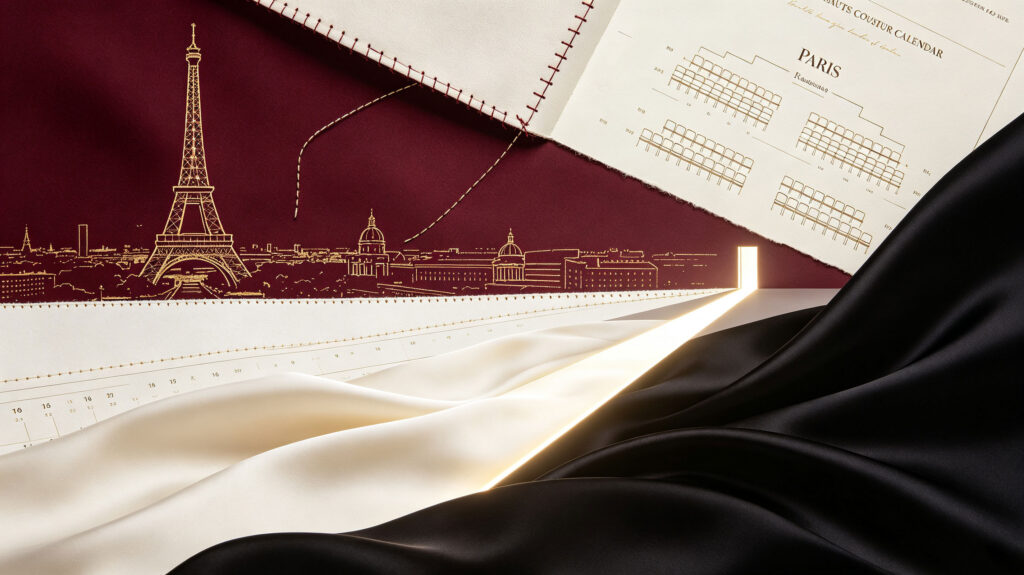
For decades, the Paris Haute Couture calendar has operated like a roll call: many of the same names, the same city, and the same implicit understanding that showing in Paris is the price of belonging to fashion’s most exclusive club. The Fall/Winter 2026 calendar, released ahead of the July 6-9 shows, reads differently. It is less a roster of continuity than a map of where couture may be heading, and of who is choosing to sit this round out.
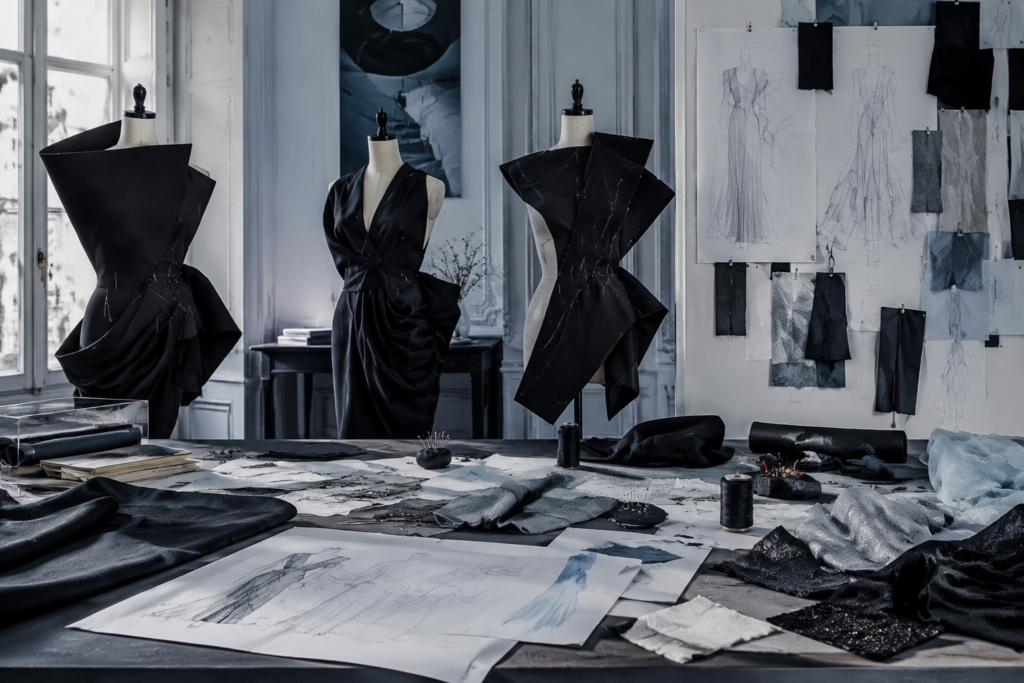
The headline story is a debut the industry has been waiting for since Pierpaolo Piccioli was named creative director of Balenciaga in 2025. On July 8, Piccioli will present his first haute couture collection for the house, marking his return to the couture atelier after a long career at Valentino, where his colour work and sculptural romanticism made him one of the format’s most respected practitioners. At Balenciaga, the register is different: Cristobal Balenciaga’s legacy is architectural black, modernist form and precise construction, not the painterly palette Piccioli is known for. Piccioli’s first Balenciaga ready-to-wear outing already suggested how he might approach the house’s couture vocabulary, including renewed attention to volume, construction and fabric development. His couture debut is therefore widely being treated as one of the season’s most closely watched shows.
The same day brings Duran Lantink’s debut as guest designer at Jean Paul Gaultier, continuing the house’s rotating creative model. Lantink, known for upcycled and shape-shifting ready-to-wear, fits the type of independent voice Gaultier has favoured for the guest slot: a designer with a clear visual language rather than a brief to reproduce conventional couture codes. His presence on the calendar, alongside Piccioli’s, creates a July 8 that places two very different visions of couture next to each other: one rooted in a heritage house’s DNA, the other in a contemporary designer’s experimental practice.
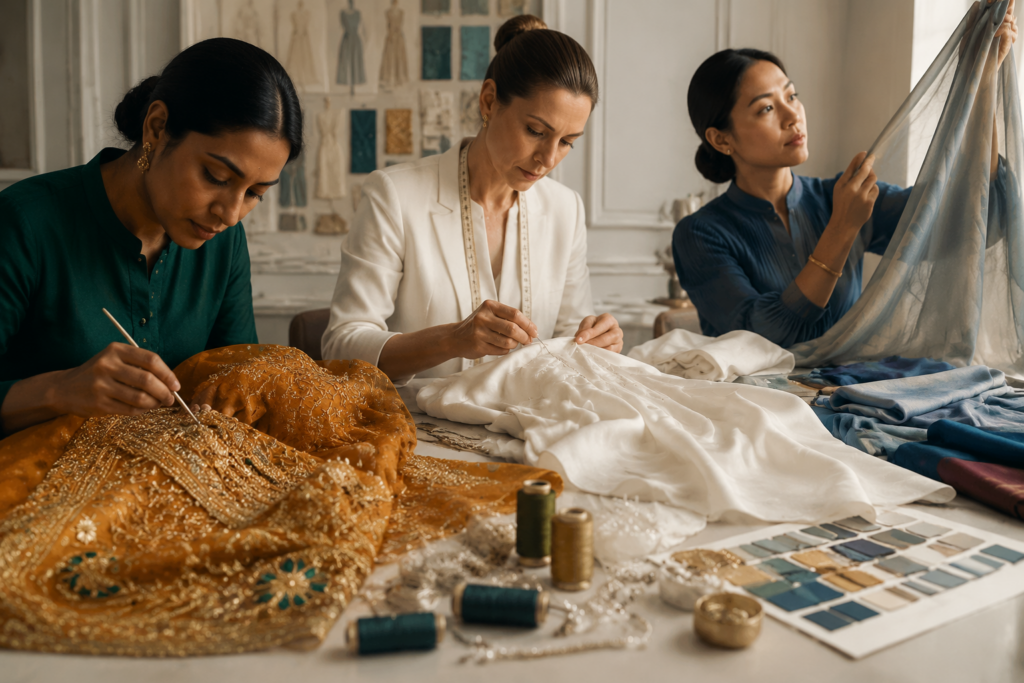
The second major signal is who is arriving. Manish Malhotra will make his official Paris Haute Couture Week debut as a guest member, as reported by FashionUnited on June 3. Malhotra’s Bollywood-rooted couture practice brings opulent Indian craftsmanship, embroidery traditions and a large South Asian client base into a week that has historically been defined by European ateliers, even as Indian designers have become increasingly visible on and around the couture calendar in recent years. Alongside him, Standing Ground, the London-based label by Irish designer Michael Stewart and winner of the 2024 LVMH Savoir-Faire Prize, also joins the official schedule. These additions can be read as more than symbolic. They suggest that the institutional boundaries around couture are being tested by market logic: the clients, the craft and the cultural energy are increasingly global, and the calendar is beginning to reflect that.
The third story is who is not on the calendar, and why. Valentino, under Alessandro Michele, has moved to showing couture only once a year, in January. Vogue reported that Michele “likes his couture season cold.” Fendi has taken an even more pointed step: Maria Grazia Chiuri’s first couture collection for the Roman house will show not in Paris but at Rome’s Galleria Nazionale d’Arte Moderna e Contemporanea on the evening of July 9, the same day the Paris calendar closes. Chiuri, born in Rome and a Fendi alumna from the Baguette-bag era of the 1990s, is anchoring the house’s couture identity in its home city rather than competing for attention on a crowded Paris schedule. Maison Margiela is also absent, along with Gaurav Gupta, Julien Fournie and Miss Sohee.
Taken together, the presences and absences describe a couture system that is becoming more contested and more strategically selective. Showing in Paris remains the core institutional route to couture visibility, but it is no longer the only way a house can claim cultural relevance around couture. Showing every season is also no longer the default. For houses with strong geographic identities, such as Fendi in Rome, or strong seasonal preferences, such as Valentino in January, the calculation has shifted from “we must be there” to “what does being there actually deliver?”
For international readers who do not buy couture, the calendar still matters. Couture is the research-and-development floor of luxury fashion. The silhouettes, fabric techniques, colour decisions and craft investments made in these ateliers shape what appears in ready-to-wear collections, high-street interpretations and eventually everyday wardrobes. When Piccioli tests Balenciaga’s construction codes, or when Malhotra brings Indian embroidery into the official Paris framework, those ideas are unlikely to stay inside the salon. They become part of the visual language that fashion operates in, and that consumers eventually encounter at many different price points.
The season also arrives at a moment when the commercial logic of couture is under quiet review. Staging a couture show can cost millions; the client base is usually estimated at only a few thousand people worldwide. Houses are asking harder questions about return on investment, not only in sales but in brand equity, creative renewal and cultural relevance. The FW26 calendar suggests that for some houses, the answer is to go bigger: a landmark debut, a significant first, a venue that makes a statement. For others, the answer is to step back, skip a season, or change the location entirely. Both responses are understandable business strategies.
What to watch next: Piccioli’s Balenciaga show on July 8 will set one of the creative tones for the week, but the longer-term question is whether the fragmentation of the calendar, with more debuts, more geographies and more selective participation, strengthens couture by making each appearance count or weakens it by eroding the collective momentum that a unified Paris week has historically provided. The answer will not arrive in one season, but this calendar makes the question unavoidable.