


Summer 2026’s Sport-Fashion Crossover: How FIFA Jerseys, Sneakerinas and Fan Identity Are Reshaping Everyday Dressing
For most of fashion history, sportswear and style have been treated as neighbours who share a fence but never a dinner table. One belonged to the stadium, the gym, the sofa. The other belonged to the office, the restaurant, the party. Summer 2026 has

For most of fashion history, sportswear and style have been treated as neighbours who share a fence but never a dinner table. One belonged to the stadium, the gym, the sofa. The other belonged to the office, the restaurant, the party. Summer 2026 has torn that fence down. The FIFA World Cup 2026, running from June 11 to July 19 across the United States, Canada and Mexico, has collided with a fashion cycle already tilting toward expressive, identity-driven dressing — and the result is the most complete sport-fashion crossover the industry has seen. But this is not just about football shirts selling out. A new pipeline has opened between fan culture and personal style, and it is changing what people reach for when they get dressed in the morning.
The numbers make the shift hard to dismiss. Pinterest’s Summer 2026 Trend Report, published in late May in partnership with Levi’s and drawn from over 600 million monthly active users worldwide, found that searches for “World Cup jerseys” had surged 840 percent. That headline figure sits inside a broader pattern: searches for “oversized football shirt outfit” climbed 92 percent, while “baddie tracksuit outfit” jumped 276 percent. Sydney Stanback, Pinterest’s global trend and culture insights lead, told FashionUnited that the moment is less about dressing like a fan than building an identity. The data does not describe people buying replica kits only to wear to matches. It describes people treating jerseys, track jackets and hybrid sneakers as wardrobe building blocks — styling them into going-out looks, travel outfits and everyday rotations in ways that have little to do with kickoff times.
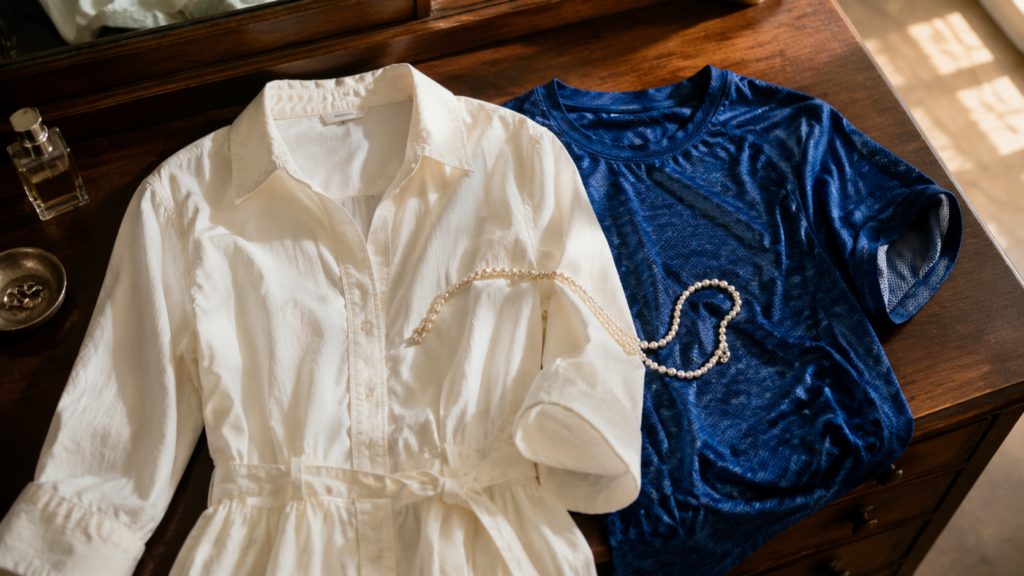
The first expression of the trend is the jersey itself, but not worn the way a supporter would wear it. Fashion editors and street-style photographers are documenting a specific styling language: oversized football shirts tucked unevenly into bubble skirts, layered under sharp-tailored trench coats, or worn open over slip dresses. Olivia Rodrigo was photographed pairing an FC Barcelona jersey with ruffled bloomers, while Dua Lipa and Addison Rae have also been cited by fashion media as examples of celebrities folding football tops into off-duty outfits. The operating principle is contrast — taking a garment coded as loud, communal and masculine-casual and pulling it into a look that feels considered, personal and gender-fluid. The jersey becomes a graphic element in an outfit, not a declaration of allegiance. Who What Wear described the approach as “the white T-shirt method” — styling a football shirt exactly as you would a basic tee, with statement skirts, tailored trousers or cargo pants doing the heavy lifting around it.
The second expression sits at the opposite end of the fashion system: luxury houses and designer labels are not observing the sport moment from a distance — they are actively shaping it. Simone Rocha’s Fall/Winter 2026 show at London Fashion Week debuted a major collaboration with Adidas Originals that produced pearl-embellished track jackets, ruffle-fronted track pants with side splits, and crystal-studded shin-guard socks tied with ribbon. Loewe, marking its 180th anniversary, created a full travel wardrobe for the Spanish national team including navy suits and sky-blue polos. Gabriela Hearst designed bespoke uniforms for Uruguay’s squad. Corteiz launched an 11-city “RULESTHEWORLDCUP TOUR” capsule. The direction of travel is clear: fashion is not waiting for consumers to drag sportswear into their wardrobes. It is meeting them there with product that already speaks both languages.
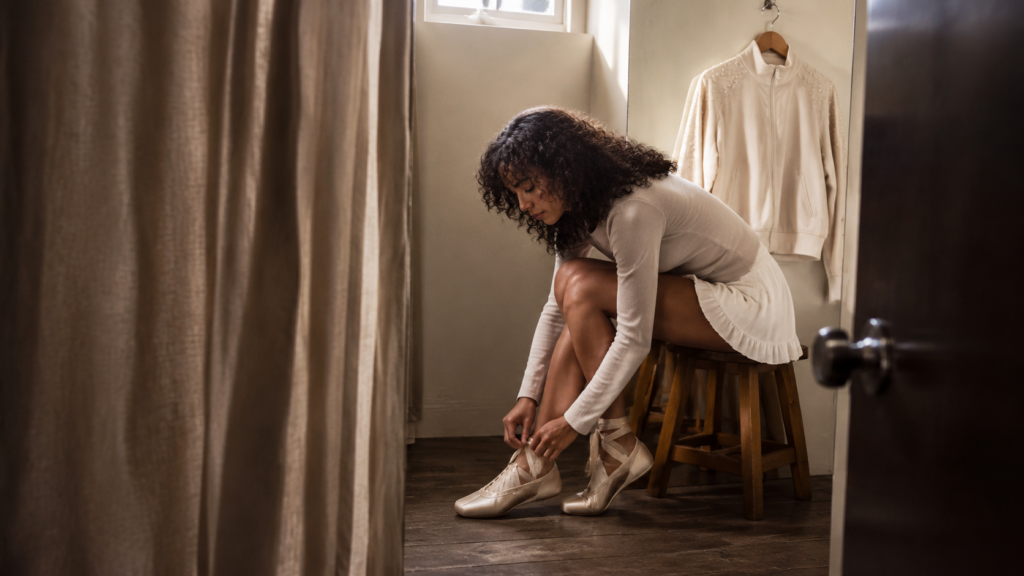
The third expression is happening below the ankle. Footwear has become the most visible site of sport-fashion hybridisation. The “sneakerina” — a ballet-flat silhouette built on a sneaker sole, often finished with ribbon laces or crystal embellishment — has emerged as the season’s most photographed shoe. Pinterest recorded a 170 percent rise in “ballet sneaker outfit” searches, alongside a 906 percent surge for “dad sneakers” and a 432 percent climb for “sneaker flats outfit.” The trend cuts across categories: it is not one shoe but a broader willingness to mix athletic construction with dress-up detailing. Soft loafers from The Row and CELINE share shelf space with beaded jelly sandals and Mary Jane trainers. The common thread is that shoes no longer need to declare which side of the sport-fashion line they belong to — the line itself has stopped being useful.
What makes this moment different from previous sport-fashion cycles is scale and geography. The 1990s gave us the track suit as streetwear. The early 2000s produced the velour sweatsuit and the designer sneaker boom. But Summer 2026 arrives with a live global tournament hosted across three countries, a Pinterest user base spanning North America, Europe, Latin America and Asia-Pacific, and a fashion calendar that had already been softening the boundary between athletic and everyday dress for several seasons. For readers in New York or London, the jersey-and-skirt combination solves a real summer dressing problem: how to look intentional in humid heat without defaulting to a sundress every day. For readers in Los Angeles or Mexico City, the lightweight track jacket works as evening air-conditioning armour. In cooler Northern European cities, the sport layering piece slots naturally into a transitional wardrobe alongside trench coats and knitwear. The trend is adaptable precisely because it is a styling logic, not a uniform.
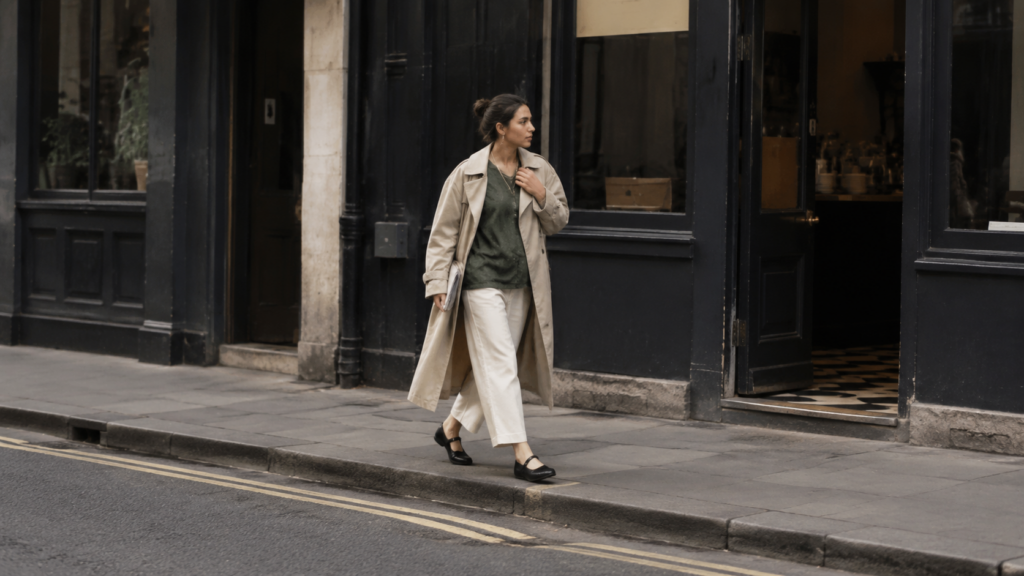
The implications reach beyond this summer. If sportswear has become a legitimate styling category rather than a separate casual silo, then the retail logic that separates “active” from “fashion” in stores, e-commerce filters and editorial coverage starts to look outdated. A customer searching Pinterest for “World Cup jerseys” or “ballet sneaker outfit” is not shopping in the activewear aisle — she is building a look. Brands that organise their offer around how people actually dress, rather than legacy category labels, stand to capture more of that behaviour. The sport-fashion crossover of Summer 2026 is not a gimmick tied to a tournament cycle. It is the most visible surface of a deeper shift: consumers are treating clothing categories as porous, and they expect style to meet them wherever they are — stadium, street, office, or all three in one day.