


Leather Is Fall/Winter 2026’s Defining Material — and It Has Gone Soft
For years, leather in fashion meant one thing: tough. A black biker jacket, a rock-star uniform, a material that signalled edge rather than ease. Fall/Winter 2026 has broken that single association. Leather is now one of the season's defining materials, and it is showing
For years, leather in fashion meant one thing: tough. A black biker jacket, a rock-star uniform, a material that signalled edge rather than ease. Fall/Winter 2026 has broken that single association. Leather is now one of the season’s defining materials, and it is showing up everywhere — as trench coats, trousers, skirts, shirts and dresses — but in a form that is softer, looser and more wearable than the biker cliché ever allowed. The material has not disappeared; it has been domesticated.
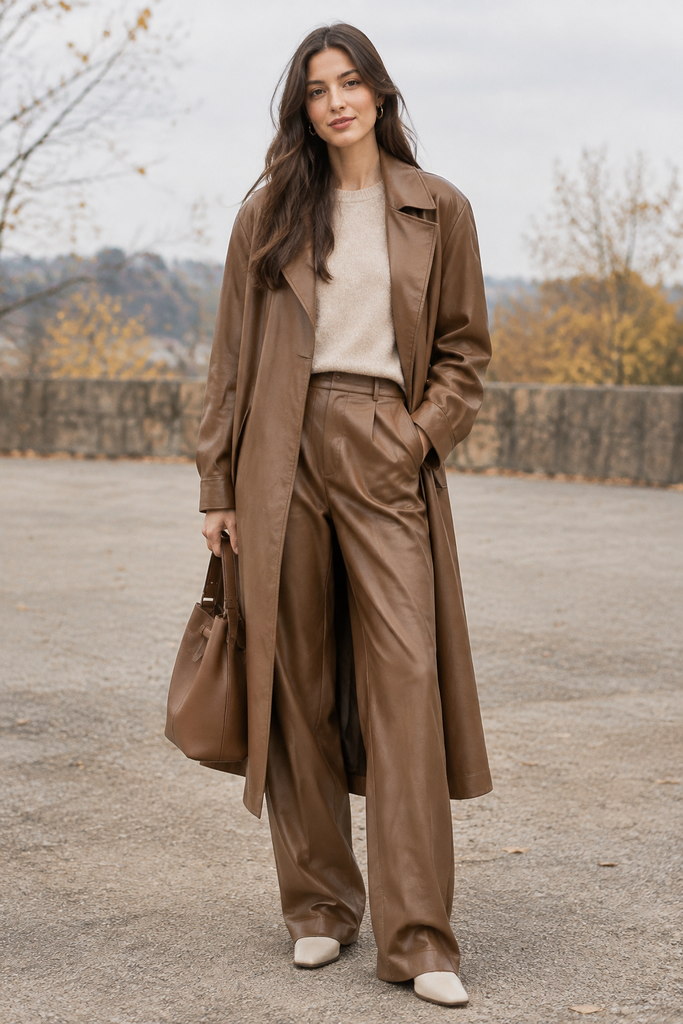
The signal comes straight from the runways, where leather was singled out among the defining trends of Milan Fashion Week. At Tod’s, Matteo Tamburini built the “Italian Signature” collection around a lightweight, silky calf leather called Pashmy, used for outerwear, skirts and trousers to add drape and depth of colour rather than toughness. At Burberry, Daniel Lee showed buttery-soft leather in heather grey and chocolate, cut into skirts and trousers; at Ferragamo, Maximilian Davis extended the material from a burgundy leather trench coat into low-rise pencil skirts. The common thread is a move away from black-and-studded toward what ELLE Germany sums up as “elegant instead of rock.”
The clearest expression is the leather trouser, which has graduated from a statement piece into a wardrobe basic. The fall 2026 versions run through familiar silhouettes — straight-leg, wide-leg, a 1970s flare and the relaxed barrel leg — so the material borrows shapes readers already wear rather than demanding a new body or a new kind of confidence. Styled the way a wool trouser would be, with a fine knit, a crisp shirt or a chunky jumper, the leather trouser stops reading as nightlife and starts reading as everyday.
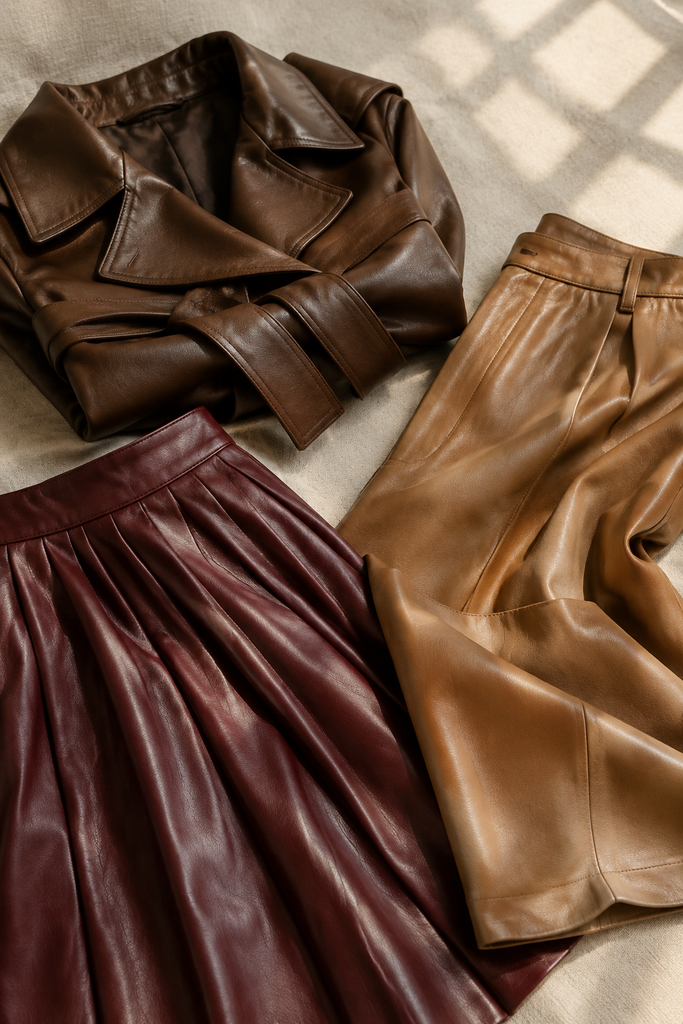
The same logic moves up the body. The leather skirt returns as a mini, a pleated midi or a pencil with a front slit, worn with an oversized knit and knee-high boots rather than a going-out top. And the leather trench coat — one of the season’s most visible outerwear ideas, in burgundy, chocolate and camel — recasts leather as the same kind of investment piece a wool coat used to be. Underneath all of it is a material shift: lighter calf leathers, buttery finishes and muted, warm colours have replaced the hard, shiny black that once defined the category.
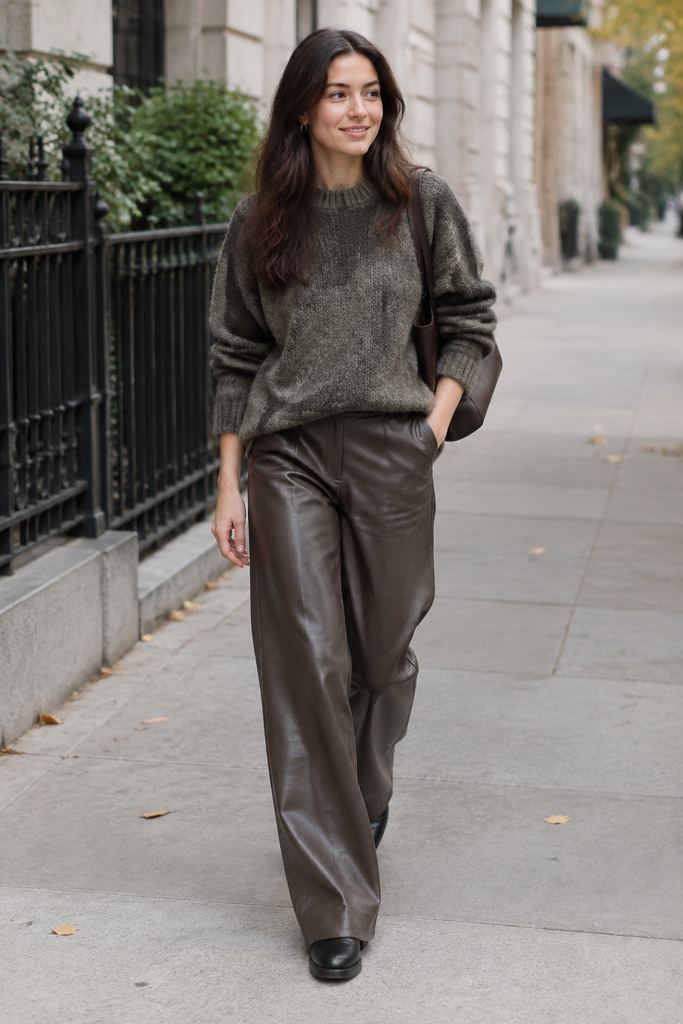
The shift matters to international readers because it changes the cost-per-wear math that now governs how people shop. A soft leather trouser or trench is no longer a once-a-week evening piece; it is a layering piece that works through a cool Northern European or North American winter under a coat, and holds up through a milder Southern European autumn on its own. It also handles the real-versus-faux question more honestly than before: a buttery genuine-leather piece is easier to justify when it is worn weekly, while a good faux-leather version does the visual job for a fraction of the price. One caveat is worth stating plainly — leather does not give the way a knit does, so the inclusive-sizing and curve-friendly cuts that were missing from the old biker era are the detail to check for now.
The practical takeaway is simple: treat leather like any other fabric, not like a costume. If you would wear the silhouette in wool or cotton, you can wear it in leather — a straight-leg trouser with a jumper, a pleated midi with an oversized knit, a trench over a white tee. The material supplies the texture; the outfit supplies the ease. That is the whole trick, and it is what turns a leather piece from a purchase worn twice a year into one that quietly lowers the cost per wear of everything around it.
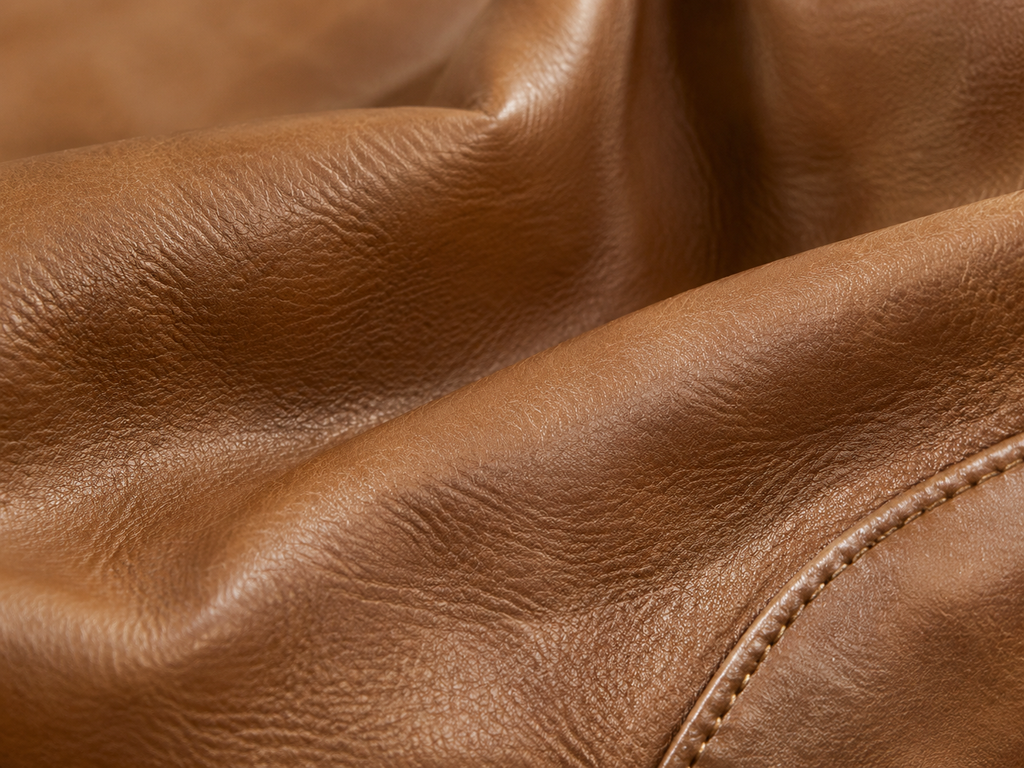
Leather’s fall 2026 moment is easy to misread as a return. It is closer to a reset. The material stopped being shorthand for rebellion and became another texture in a working wardrobe — softer, warmer, and worn like anything else you actually own.