


The Capsule Wardrobe Is No Longer About Minimalism: Why 2026 Style Has to Travel Better
The capsule wardrobe used to sound like an aesthetic promise: fewer pieces, cleaner lines, quieter colors, a life edited into soft neutrals and perfect basics. In 2026, that idea is changing. The useful capsule wardrobe is no longer defined by how minimal it looks
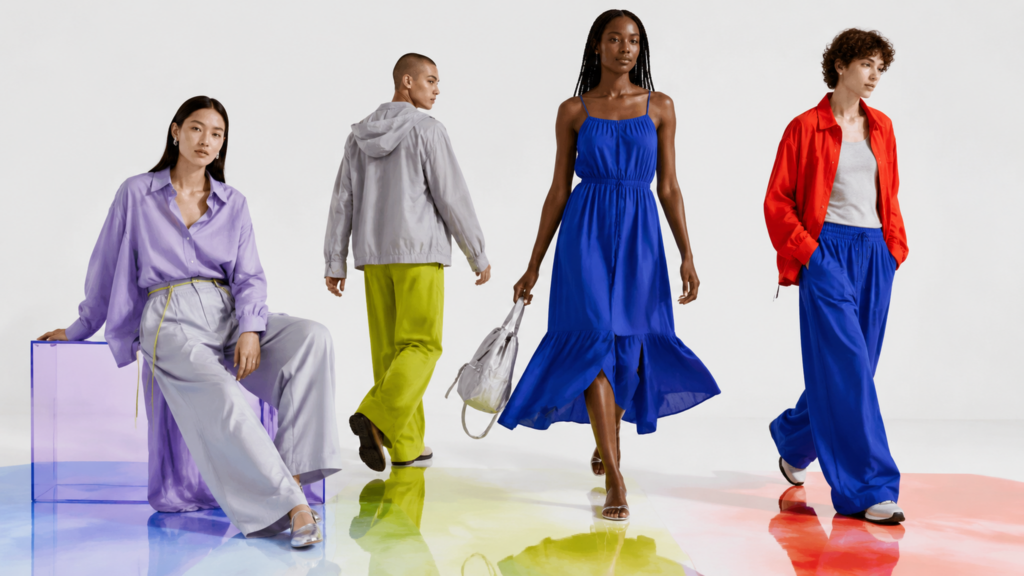
The capsule wardrobe used to sound like an aesthetic promise: fewer pieces, cleaner lines, quieter colors, a life edited into soft neutrals and perfect basics. In 2026, that idea is changing. The useful capsule wardrobe is no longer defined by how minimal it looks in a closet, but by how well it travels through real life.
That matters because the modern wardrobe is being pulled between several pressures at once. Consumers are more value-conscious, travel has become more fragmented, weather is less predictable, and many people move between work, leisure, family responsibilities and short trips without changing clothes for every scene. A garment now has to answer a harder question: can it do more than look resolved in one photograph?
McKinsey and The Business of Fashion’s State of Fashion 2026 report, published in November 2025, described a market shaped by low growth, cautious consumers and a stronger search for value. That context changes the meaning of a capsule wardrobe. It is not a moral performance of restraint or a uniform of beige basics. It is a strategy for reducing decision fatigue, avoiding wasteful purchases and making each piece work harder.
Travel makes the point visible. Expedia Group’s Unpack ’26 Summer report, released in May 2026, points to a more measured travel mood: domestic demand, road trips, multi-hotel itineraries, bleisure travel and value-driven destination choices. Those patterns create a different clothing problem from the classic resort suitcase. A traveler might need one outfit for a morning train, a museum, dinner, a warm platform, a cool lobby and an unexpected rain shower. The best clothes are the ones that keep earning their space.
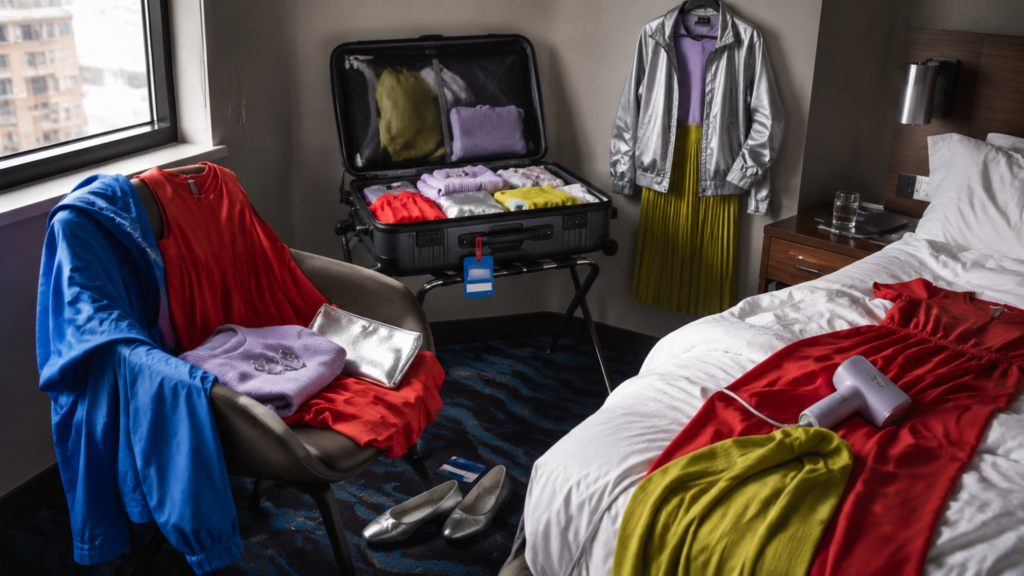
This is why the travel capsule has become a useful test of style literacy. It exposes weak purchases quickly. A top that only works with one bra, trousers that wrinkle badly after sitting, a jacket that cannot handle air-conditioning or a cool evening, or shoes that fail after four blocks all become liabilities when luggage is limited. Travel turns theory into evidence.
The new capsule wardrobe has three directions. The first is fabric intelligence. A shirt in cotton poplin, linen, Tencel lyocell, lightweight wool, seersucker or a breathable technical blend can be more valuable than another decorative top if it handles heat, movement and repeated wear. The issue is not natural versus synthetic. It is whether the fabric suits the climate, dries well, resists odor, packs without becoming unusable and feels good against moving bodies.
The second direction is silhouette flexibility. A useful capsule piece needs enough structure to feel intentional and enough ease for sitting, walking and eating. Wide-leg trousers, relaxed shirting, soft tailoring, skirts with movement, dresses with sleeves or adjustable straps, and light outer layers all work because they leave room for the body to change through the day. That matters for petite, tall, plus-size, curve-friendly, pregnant, disabled and gender-fluid dressers as much as anyone packing efficiently. Versatility is not real if it only works on one body or one posture.
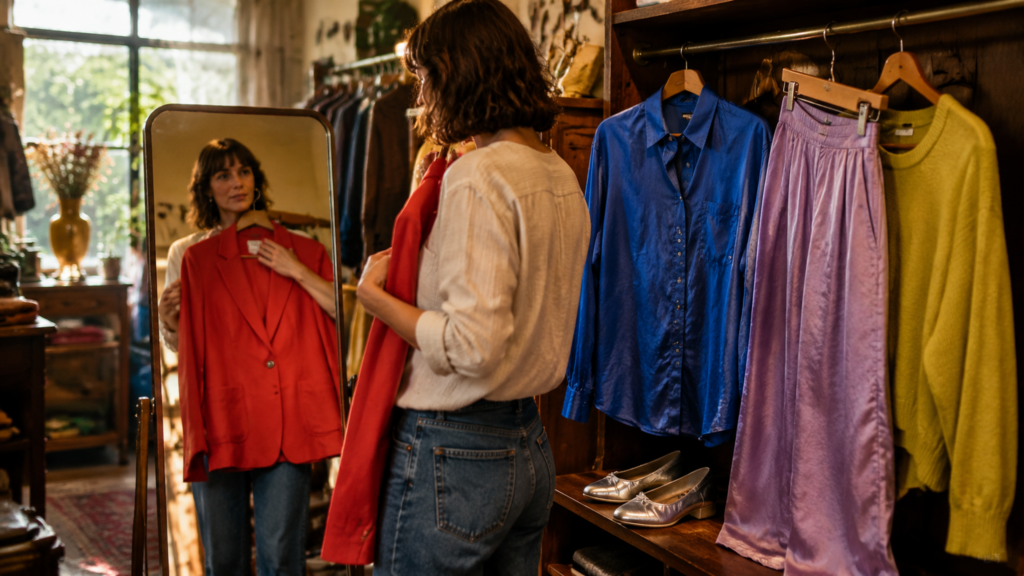
The third direction is color and texture discipline, but not in the old minimalist sense. A travel wardrobe does not have to be black, white and beige. Navy, olive, ivory, tobacco, rust, soft blue, charcoal, cream or deep green can all function as capsule colors if they repeat well and suit the wearer’s skin tone, climate and lifestyle. Texture also matters: ribbed knit, matte cotton, washed linen, compact wool or hammered satin can make repeated outfits feel considered rather than repetitive.
The shareable truth is simple: a capsule wardrobe is not a small wardrobe; it is a wardrobe with fewer dead ends. The best pieces do not demand a special mood, a perfect forecast, a narrow body assumption or a single social setting. They keep options open.
This is also where resale becomes part of the argument. ThredUp’s 2026 Resale Report projects that the global secondhand apparel market will keep growing faster than the overall apparel market, reaching $393 billion by 2030. Resale does not automatically make every purchase responsible, but it tends to favor clothes with broad usefulness: clear sizing, durable fabric, recognizable categories, adaptable proportions and colors that can move between wardrobes. A travel-ready garment often has a better afterlife because another person can imagine using it.
The climate dimension cannot be ignored either. The World Health Organization’s April 2026 heat and health fact sheet notes that heatwaves and prolonged excess heat are increasing in frequency, duration, intensity and magnitude, and recommends light, loose-fitting clothing for keeping the body cooler. That does not turn fashion into health policy. It does make clothing comfort harder to dismiss. A capsule wardrobe that cannot handle heat, humidity, rain, indoor cooling or seasonal swings is not practical for many parts of the world.
Global variation is important here. A capsule wardrobe for London or Copenhagen may need light layers and rain tolerance. One for Singapore, Manila, Miami or Dubai may begin with humidity, sweat and air-conditioned interiors. A North American road-trip wardrobe has different demands from a European city-break wardrobe where stairs, cobblestones and hand luggage matter. The point is not to prescribe one list. It is to build a logic that respects place.
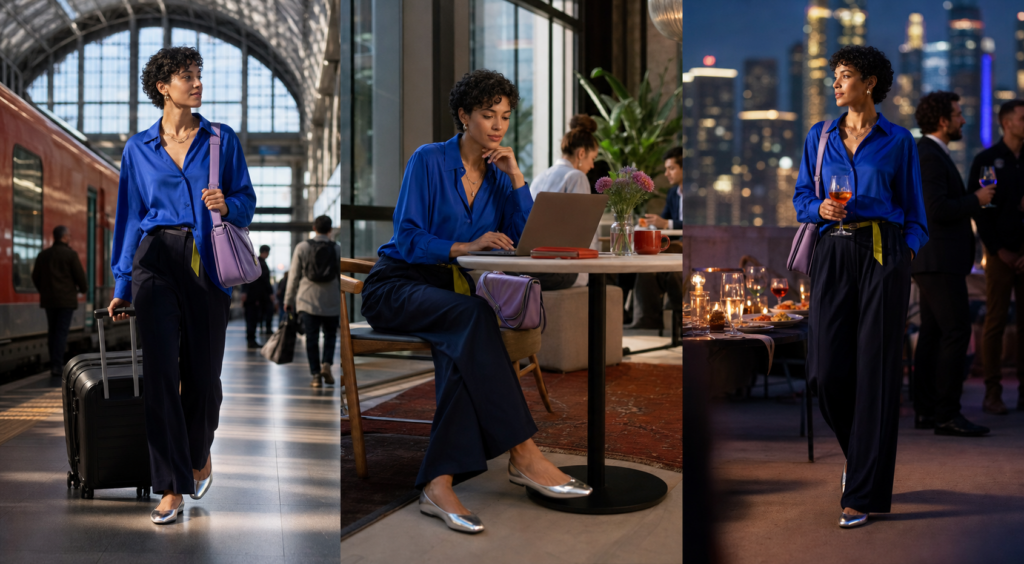
For shoppers, the useful test is concrete. Before buying, ask whether a piece can be worn for at least three real scenarios: travel day, work or errand day, and dinner or social day. Ask whether it works with two pairs of shoes, layers without bulk, still feels good after sitting for two hours, and can be washed, steamed or aired without drama. If the answer is no, the piece may still be beautiful. It may simply not belong in the capsule.
This does not mean giving up pleasure. A good capsule wardrobe should still have personality: jewelry, color, print, an unusual shoe, a sharp jacket, a sensual texture, a sentimental scarf. The difference is that expressive pieces have to converse with the rest of the wardrobe instead of isolating themselves from it. Personal style becomes stronger when fewer items are waiting for perfect conditions.
The capsule wardrobe of 2026 is not a retreat into sameness. It is a response to a more mobile, cost-aware and climate-aware life. The question is no longer whether a wardrobe looks edited from the outside. The better question is whether it carries a person through the day, the trip, the season and the next version of life with fewer compromises.