


Cruise 2027: Chanel, Dior, Gucci and Louis Vuitton Reframe Luxury Around Wearability and Cultural Setting
Cruise season usually arrives as a polished interlude between louder runway moments. The clothes are meant to travel, the shows are built for images, and the commercial purpose is rarely hidden: pre-collection pieces often remain on the shop floor for longer than seasonal runway
Cruise season usually arrives as a polished interlude between louder runway moments. The clothes are meant to travel, the shows are built for images, and the commercial purpose is rarely hidden: pre-collection pieces often remain on the shop floor for longer than seasonal runway drops. Cruise 2027 felt more revealing than usual because several major houses used the season to test a difficult question: what should luxury look like when shoppers are more cautious, more style-literate and less willing to accept spectacle as value?
The answer was not identical across brands, but the pattern was clear. Chanel looked to Biarritz and house heritage. Dior turned Los Angeles into a cinematic stage. Gucci shut down Times Square with a commercially direct vision of GucciCore. Louis Vuitton placed Keith Haring and uptown museum culture inside The Frick Collection. Among the four shows discussed here, three were staged in the United States. That does not mean luxury fashion has suddenly become America-centric, but it does show how strongly Los Angeles and New York were used this season as cultural backdrops for global storytelling.
The market context helps explain the choice of settings. Bain & Company and Altagamma’s most recent luxury market reporting describes a sector facing economic headwinds, uneven regional demand and a more selective consumer. In that environment, the American cultural stage has strategic value even when the sales picture is more complex than a simple “growth market” narrative. A Cruise show in Los Angeles or New York is not only a sales gesture. It is a way to attach a collection to Hollywood, Times Square, art institutions, celebrity circulation and media visibility.
Chanel was the geographic exception, and the exception was telling. Matthieu Blazy chose Biarritz, the French seaside town tied to Gabrielle Chanel’s early couture history, for his first Chanel Cruise show on 28 April 2026. The setting gave the collection a clear framework: movement, seaside ease and house memory. Reports from the show noted the recreated salon atmosphere, the return to Gabrielle Chanel’s 1915 Biarritz story and a wardrobe that softened the house codes rather than rejecting them.
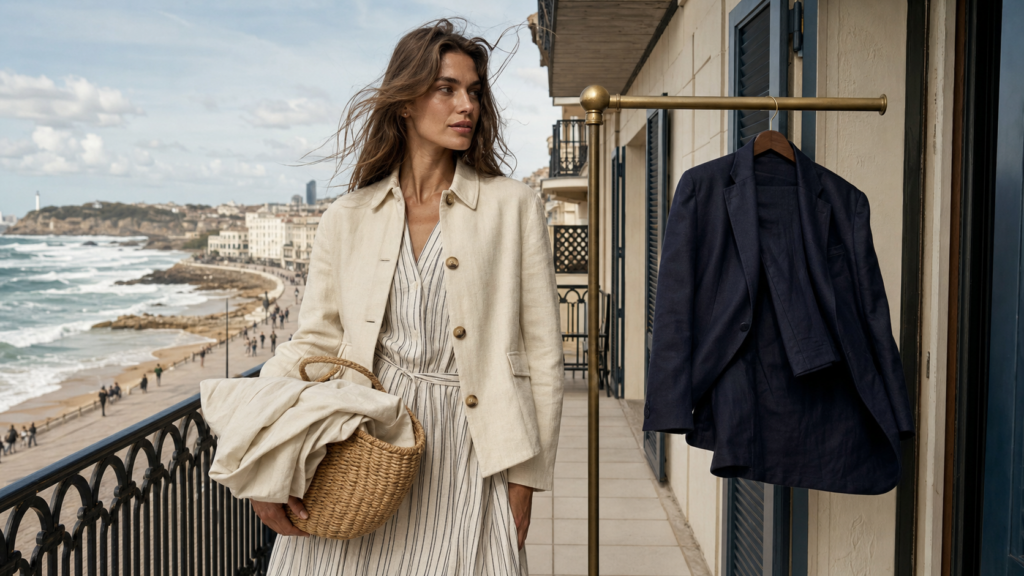
Blazy’s Chanel did not read as rupture. It read as a house being loosened. Jackets moved more softly, skirts carried air, beach references appeared without becoming costume, and the familiar Chanel vocabulary was treated as something to animate rather than simply preserve. That is an important distinction. In a market tired of both logo excess and empty minimalism, heritage works best when it gives clothes behavior: how they move, how they travel, how they sit on a real body.
Two weeks later, Jonathan Anderson staged his first Dior Cruise collection at LACMA in Los Angeles on 13 May. The show leaned into Hollywood as both industry and myth. Coverage of the collection described a cinematic framing, with references to film culture, Old Hollywood glamour, the Bar Jacket, Marlene Dietrich and the tension between fantasy and construction. Sabrina Carpenter was among the highly discussed guests and wore a butter-yellow Dior look connected to the collection; rather than treating that as the show itself, the safer reading is that her appearance helped amplify the collection’s Hollywood-facing message.
Anderson’s Dior was less about literal red-carpet dressing than about the machinery behind glamour. Frayed tailoring, cinematic lighting, feathered headpieces and familiar house references were pushed through a Los Angeles filter. The result was not pure nostalgia. It suggested that Dior’s next chapter may depend on making fantasy feel constructed, visible and slightly self-aware. If Chanel’s answer was heritage in motion, Dior’s answer was cinema as a way to organize desire.
On 16 May, Demna brought Gucci Cruise 2027 to Times Square. The collection, GucciCore, was presented as a direct engagement with Gucci’s recognizable vocabulary: tailoring, red coats, pencil skirts, denim, shearling, sensual dressing, celebrity performance and the brand’s appetite for commercial image-making. Reports from the show described the event as a Times Square takeover, with Cindy Crawford, Paris Hilton and Tom Brady among the figures walking the runway.
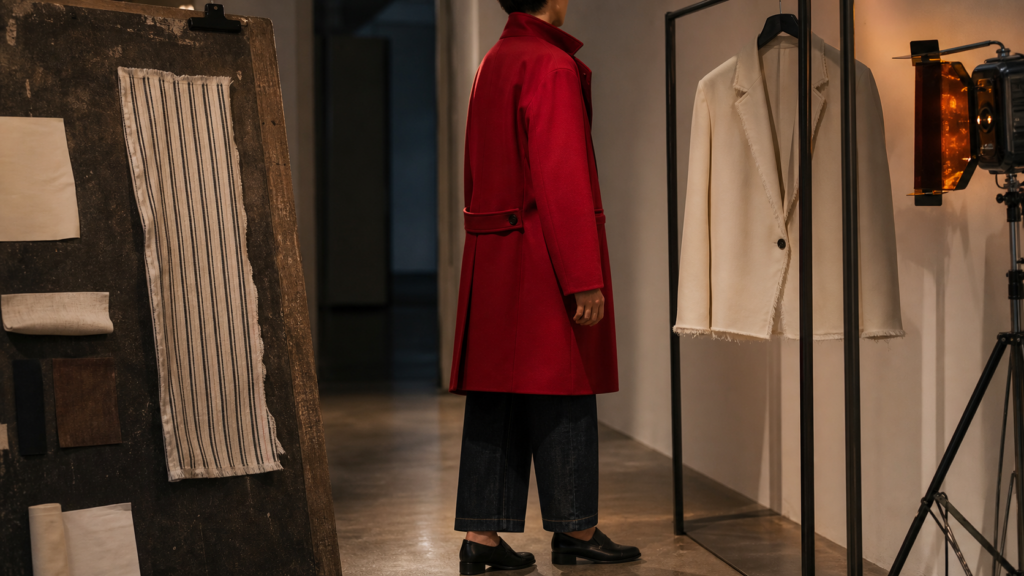
The important point is not that every critic agreed on GucciCore. It is that the collection was unusually legible. Demna’s Gucci has been trying to clarify what the house should mean after a turbulent period for the brand, and Cruise 2027 gave that question a highly visible answer: recognizable clothes, recognizable characters, recognizable city. The risk is obvious. Legibility can become simplification. But for a house that needs customers to understand the direction quickly, clarity is not a minor creative tool. It is part of the strategy.
Louis Vuitton closed the sequence on 20 May at The Frick Collection in New York. Nicolas Ghesquiere built the Cruise 2027 collection around a 1930s Louis Vuitton trunk marked by Keith Haring in the 1980s, using it as a bridge between uptown museum formality and downtown graphic energy. ELLE’s review described the collision of fine art and rock ‘n’ roll, while the setting reinforced Vuitton’s long-running interest in travel, art patronage and cultural placement.
The Frick show also complicates any simple story about wearability. Vuitton’s collection was not the most commercially plain of the season, and it did not need to be. Its role was to show how a heritage travel house can keep expanding its cultural vocabulary without abandoning the archive. Ruffled collars, leather jackets, boxing shorts, damask surfaces and Haring-inflected graphics created a more eccentric proposition than Gucci’s directness or Chanel’s ease. But the shared question remained: how does a luxury house make its codes feel active now?
Taken together, Cruise 2027 points to three useful shifts. First, luxury is recalibrating around wearability, though not in the same way at every house. Chanel emphasized movement and ease. Dior made glamour more constructed and cinematic. Gucci translated brand identity into a more direct wardrobe language. Louis Vuitton used archive and art to keep experimentation inside a recognizable house frame.
Second, setting has become part of the product story. Biarritz was not just a beach town; it was a Chanel origin point. LACMA was not just a museum; it turned Dior toward Hollywood and Los Angeles image culture. Times Square was not just spectacle; it was a shorthand for mass visibility, performance and urban character. The Frick was not just a beautiful room; it placed Vuitton’s travel archive inside New York’s art history. These settings do not prove that the clothes are good, but they shape how the clothes are read.
Third, the season shows that creative-director transitions are not won by disruption alone. The more interesting test is whether a designer can build a repeatable framework: one that customers, editors, retailers and image-makers can understand without reducing the house to a single viral moment. Cruise 2027 gave early clues, not final verdicts. Blazy’s Chanel, Anderson’s Dior and Demna’s Gucci will need several seasons before their directions can be judged properly.
The most useful takeaway is not that Cruise 2027 produced one winning aesthetic. It is that the season showed luxury houses trying to make creative ambition easier to understand at a time when the bar for “worth it” has risen. That does not mean every expensive garment becomes justified because it is wearable, or every famous setting makes a collection meaningful. It means the strongest luxury narratives now have to work on several levels at once: image, history, cultural setting, commercial clarity and the reality of whether someone can imagine the clothes in a wardrobe.
That is a healthier way to read Cruise 2027 than treating it as a celebrity contest or a ranking of biggest shows. The season was really about translation. How does Chanel translate heritage into movement? How does Dior translate cinema into clothes? How does Gucci translate brand recognition into a usable wardrobe? How does Louis Vuitton translate art and travel into a contemporary runway language? None of those answers is final. But together, they show a luxury market trying to make spectacle serve a clearer purpose.