


The Sleeveless Layer Is How You Re-Wear Your Whole Wardrobe
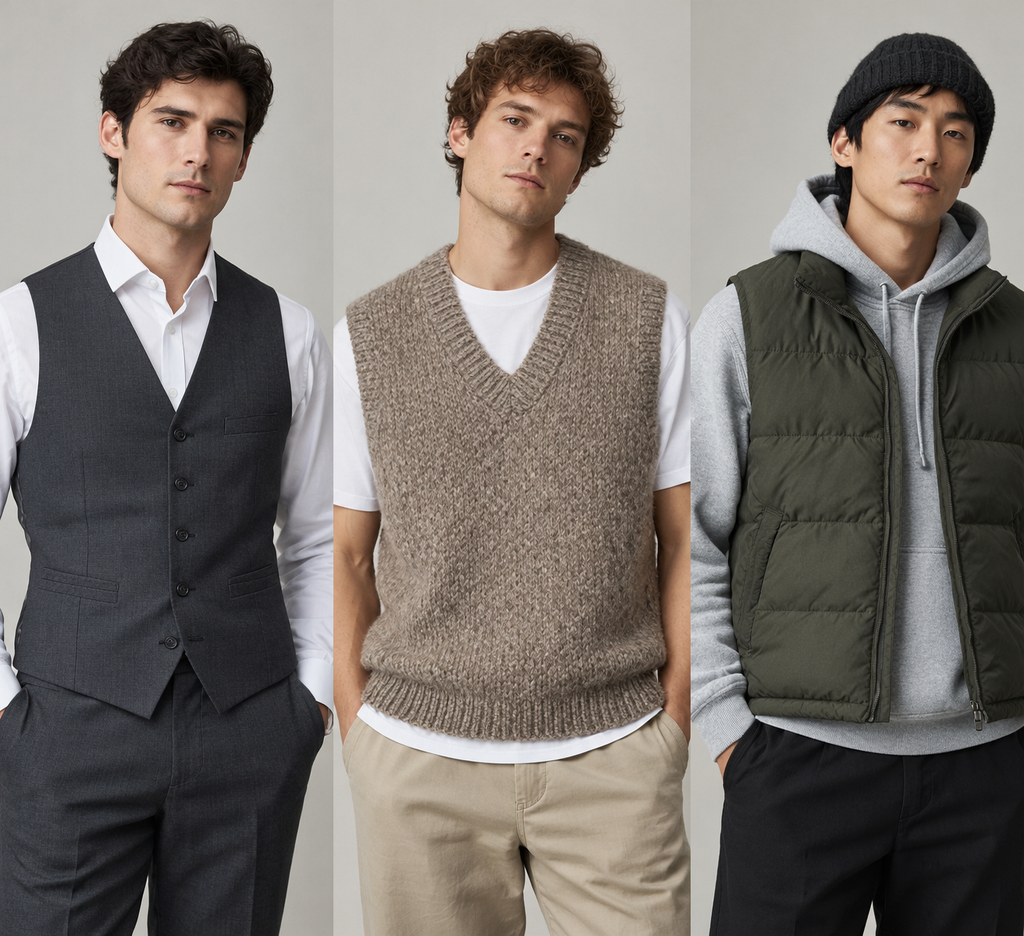
For a season that keeps telling us to layer, the most useful thing to reach for this autumn has no sleeves. The sleeveless layer is everywhere at once: a tailored waistcoat on a workwear run, a chunky knitted tank top over a white tee,
For a season that keeps telling us to layer, the most useful thing to reach for this autumn has no sleeves. The sleeveless layer is everywhere at once: a tailored waistcoat on a workwear run, a chunky knitted tank top over a white tee, a quilted gilet over a hoodie at the school gate. The easy read is that this is another revival — a 2000s relic dusted off and repriced. The better read is that the sleeveless third layer has become the most efficient answer to the specific problems autumn 2026 keeps putting in front of us: weather that cannot decide, days spent with arms busy, and a wardrobe we are tired of endlessly expanding.
The drivers point in the same direction. Autumns in many places feel less predictable than they used to — too mild for a wool coat at nine in the morning, too cool for a single jumper by five. A sleeveless layer lands on that seam with unusual precision: it insulates the torso and keeps the core warm, which helps the rest of the body hold onto heat, while leaving the arms free for a commute, a desk, a pushchair, a shoulder bag. And because it is a layer rather than an outfit, it is the cheapest kind of change there is — a single piece that makes the shirts, tees and trousers you already own read as new, rather than another item added to the pile.
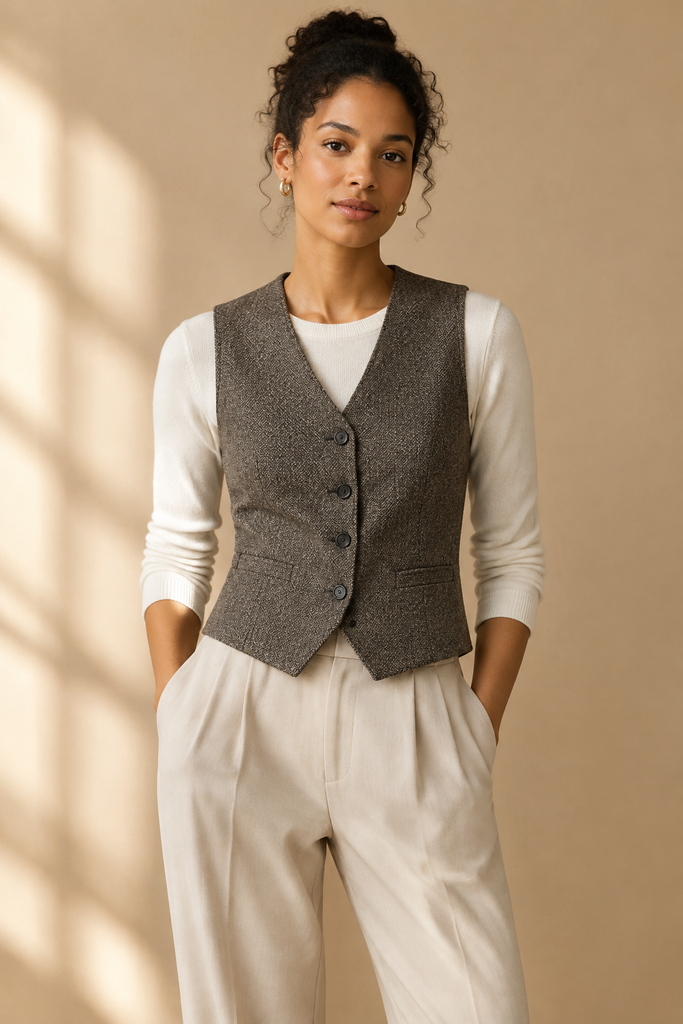
The clearest sign that this is a shift and not a moment is that the sleeveless layer now takes several forms. It now runs as three distinct pieces, each doing a different job. The tailored waistcoat — structured, close to the body, borrowed from menswear — has become the season’s office answer, opened or buttoned over a crisp shirt in the polished direction Autumn 2026 has reclaimed from the suit. The knitted tank top — looser and more textural than the buttoned-up preppy version of a few years ago — does the same work with softness, worn over a tee or on its own. The padded gilet — fleece, quilted or down — is the everyday climate layer, thin enough to sit under a coat later in the season and warm enough to stand in for one on a mild day.
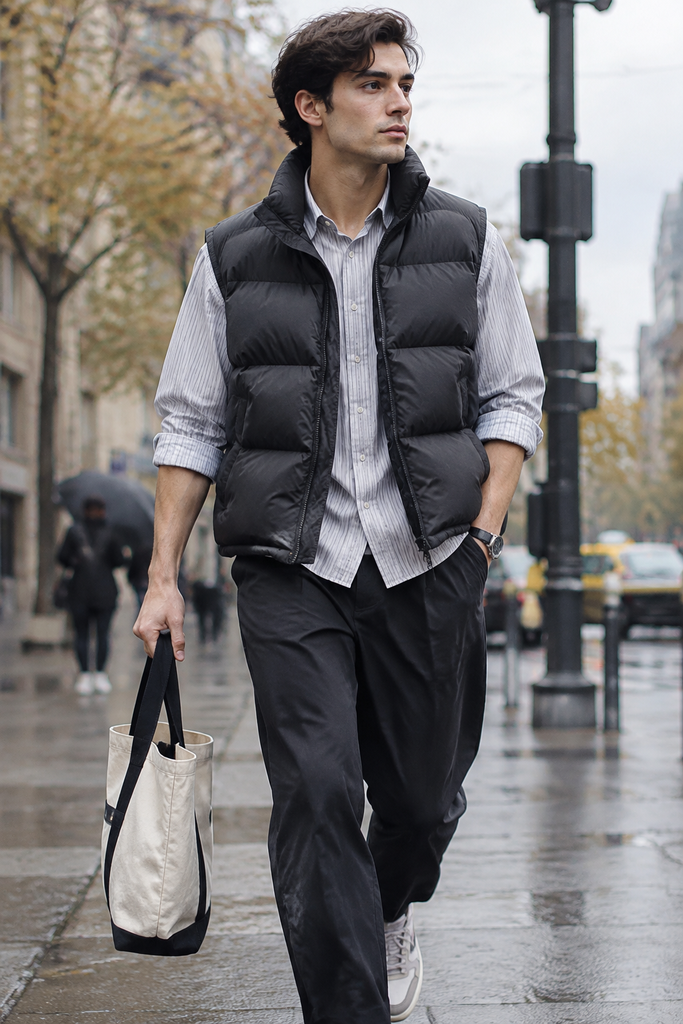
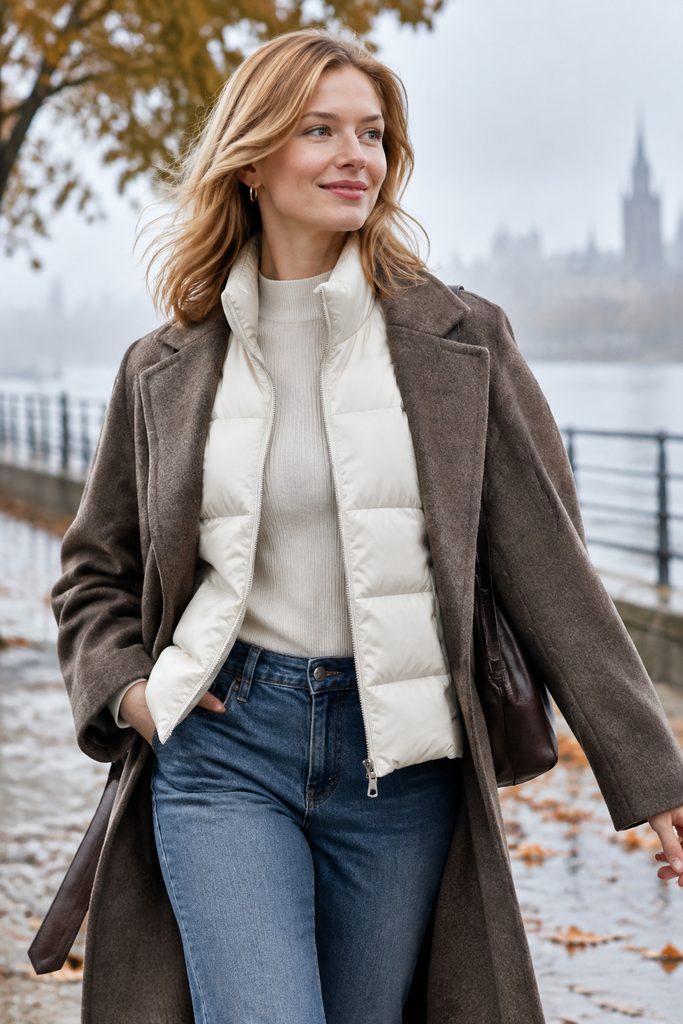
These three forms share a single styling logic, which is why the trend has legs. First, wear the sleeveless layer as the structured point of a soft outfit: a tailored waistcoat over a fine knit or a tee turns something casual into something deliberate without adding a jacket. Second, use it as the soft point of a structured outfit: a chunky knitted tank top or a quilted gilet over tailoring, or over a slip dress, breaks a sharp silhouette and keeps it from tipping into costume. Third, treat it as the missing middle layer — the piece that turns a shirt into a proper autumn outfit, or a coat into a system, by closing the gap between collar and hem. In every version the rule is the same: let the sleeveless layer supply the structure or the texture, and keep the base simple.
What makes the sleeveless layer unusually democratic is how cleanly it scales. In a cool, damp Northern European or North American autumn it is a real insulating layer under a coat; in a warmer Mediterranean or Southern California autumn it is the whole outer layer; in an over-air-conditioned office it is the piece you add and remove without changing the rest of the look. And because it has no sleeves, it sidesteps the part of clothing most likely to fit badly: there is no shoulder to pull, no cuff to land in the wrong place, no sleeve length to guess. That makes it easier to wear across a wider range of bodies — and easier to buy, resell and borrow — than a jacket ever is.
The practical takeaway is a single sentence worth remembering: a sleeveless layer is not a new outfit, it is a new way to wear the outfits you already own. That is the exact logic — one piece doing more work, lowering the cost per wear of everything around it — that has quietly governed the smartest shopping of the last few years. The waistcoat that sharpens a white shirt in September is the same knitted tank top that softens a tailored coat in January; the gilet you wear over a hoodie in October sits under your coat in December. It is the rare trend that asks you to buy less, not more, and still changes how you look.
The sleeveless layer’s return is easy to misread as nostalgia for a piece that never fully left menswear. It is closer to the opposite. The sleeveless layer came back because it solves a very 2026 problem: how to dress for a season that no longer behaves, without buying a whole new wardrobe to match it. The answer turns out to be the garment that makes no promises about covering your arms — and, in exchange, covers almost everything else that matters.