


2026 Met Gala|When Clothing Becomes Wearable Art
Theme: Costume as Art The Met Gala, fashion‘s equivalent of the Oscars, has always been the ultimate crossroads of fashion and art. The 2026 edition elevated this fusion to an unprecedented level. Under the theme "Fashion Is Art," the gala celebrated the Costume Institute’s
Theme: Costume as Art
The Met Gala, fashion‘s equivalent of the Oscars, has always been the ultimate crossroads of fashion and art. The 2026 edition elevated this fusion to an unprecedented level. Under the theme “Fashion Is Art,” the gala celebrated the Costume Institute’s exhibition “Costume Art.” Curator Andrew Bolton juxtaposed over 200 paintings and sculptures with more than 200 historical and contemporary garments, exploring sub-themes like “the classical body.” Bolton observed, “The clothed body plays a central role in every gallery of the Met.” From classical drapery to avant-garde silhouettes and tech‑driven wearables, designers and guests dissolved the line between fashion and art, condensing art history onto the red carpet and turning haute couture into living, wearable artworks. The evening also inaugurated the museum’s new permanent Condé Nast Galleries, a lasting home for fashion as a serious art form.
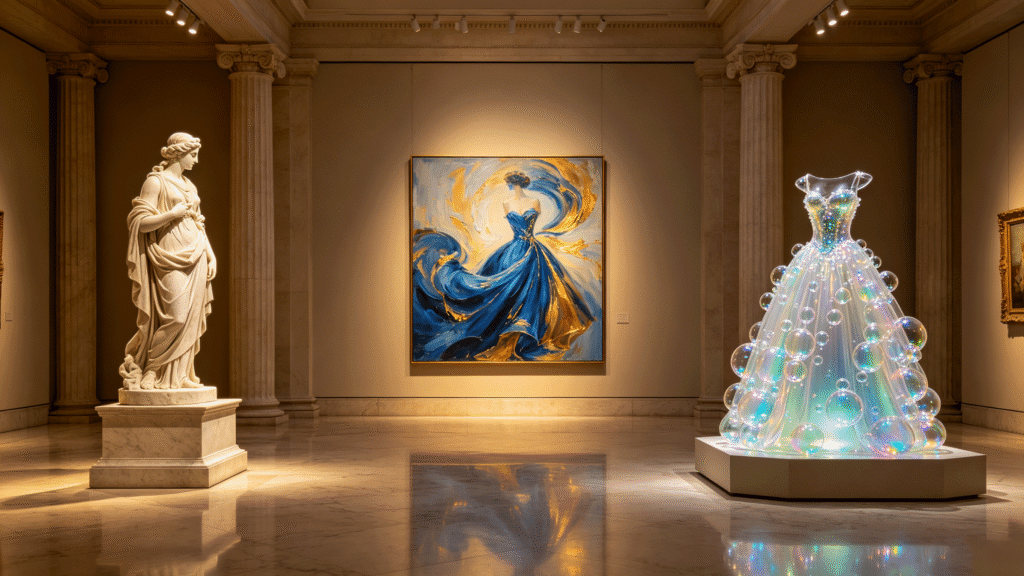
Red Carpet as Moving Sculpture
I. Living Sculpture
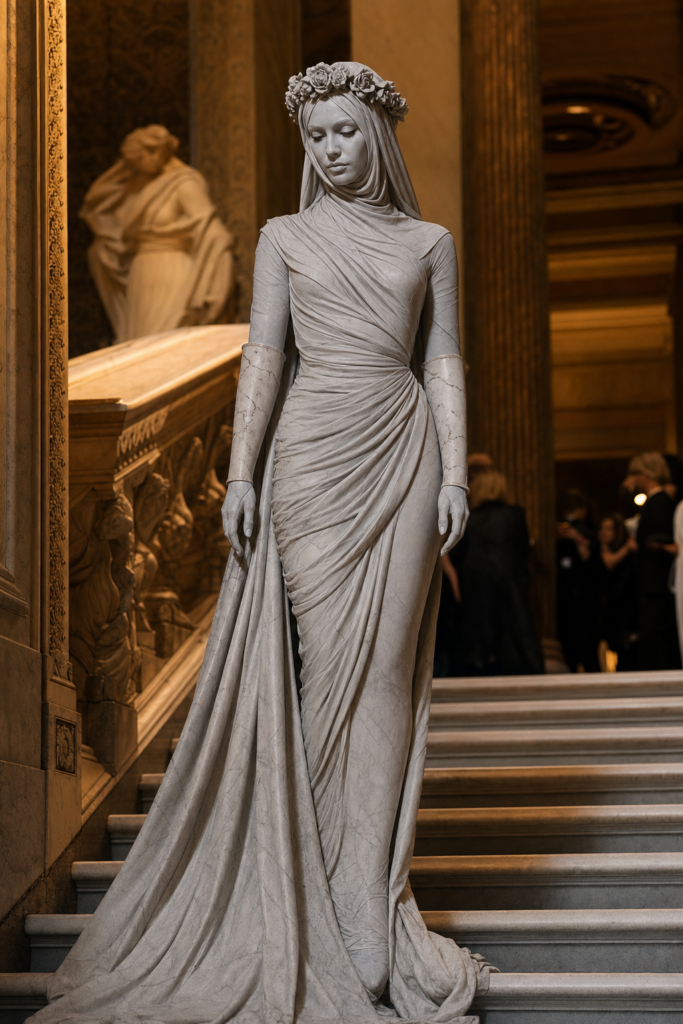
One of the night’s most striking expressions turned the human body into classical marble. A head-to-toe grey-white look simulated stone so precisely that the wearer appeared as a breathing ancient statue — achieved through latex and spandex techniques. It paid tribute to Raffaelle Monti’s 1847 Veiled Vestal and Giuseppe Sanmartino’s Veiled Christ.
The “metallic body” also emerged: a 24-karat gold sculptural breastplate, fiberglass and automotive-paint cuirasses, glazed resin shells. One gold bustier referenced Saint Laurent’s Fall 1969 couture collaboration with artist Claude Lalanne, blurring fashion and sculpture. Some designs used exaggerated padding to alter the body‘s silhouette, asking: When clothing transforms the body, does it become sculpture?
II. Wearable Painting
A hand-painted gown required 40 hours of work. Using oil-painting techniques on fabric, the artist layered about 30 base colors, then air-dried the piece for four days — no industrial coatings, only fine-art materials. The design referenced van Gogh’s Starry Night, Munch’s The Scream, and a 1997 Mugler butterfly dress, creating a “wearable painting with an eerie undertone.”
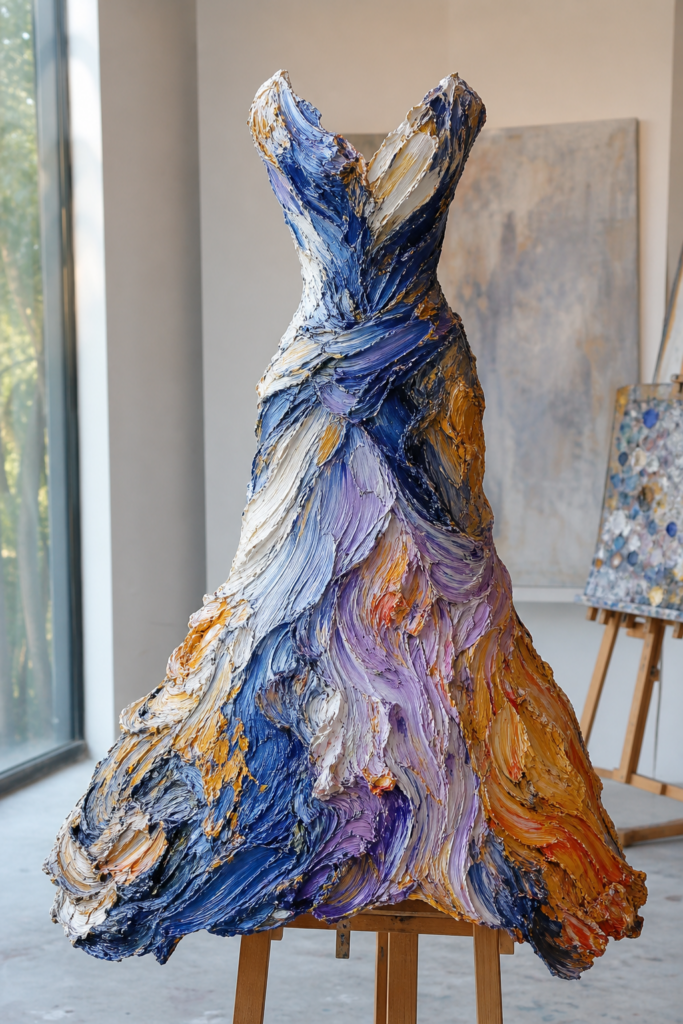
Other looks paid homage to Gustav Klimt’s The Kiss with gold-leaf embroidery, or directly translated an artist’s painting into a three-dimensional garment. These were not copies but translations of two-dimensional color and composition into dynamic, three-dimensional experiences.
III. Technological Marvels
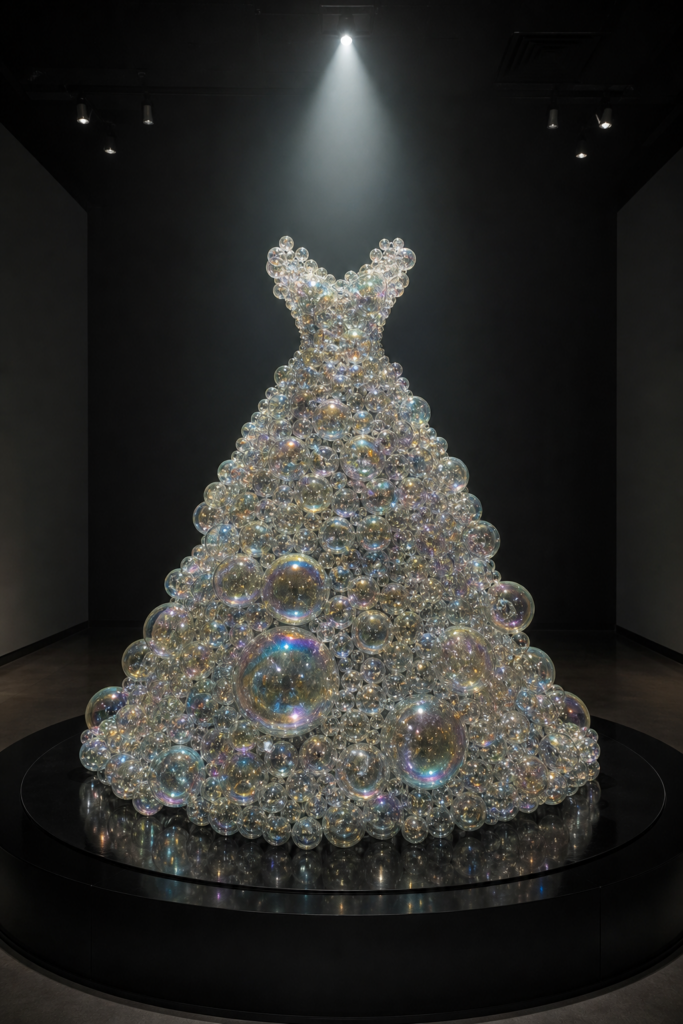
The “Airo” gown was made from over 15,000 independent glass bubbles, requiring 2,550 hours of assembly. Designer Iris van Herpen said, “The human body is 99.9% empty space — once you realize that, everything becomes almost surreal.” Hidden beneath the skirt, a microprocessor released real floating soap bubbles as the wearer walked — no CGI, pure physics. Other designs featured micro-LEDs that pulsed with the wearer‘s breath, or thermochromic fabric that shifted color with body heat. These technologies turned clothing into a dynamic dialogue with the body and environment.
Echoes of Art History
Many looks directly referenced art history: Renaissance portraiture, Baroque drapery, Neoclassical silhouettes. One American painter’s minimalist portraits of Black subjects — often a figure in everyday clothes against a plain background — inspired several guests, from exact re-creations (white T‑shirt, sunglasses, blue background) to abstract translations of color blocks and proportions. Classical sculpture also reappeared: translucent organza mimicking Greek chitons, leather Roman-style cuirasses over soft silk. These juxtapositions echoed the exhibition‘s theme of “the clothed body.”
The Exhibition Itself
The 2026 exhibition opened the new Condé Nast Gallery, elevating fashion within the Met. Visitors could see a 17th-century Dutch portrait featuring lace collars displayed next to an actual garment from the same period, or an early-20th-century evening dress placed beside an ancient Greek sculpture — two thousand years apart yet sharing similar waistlines and draping. The message: Clothing has never been a fringe of art, but a central thread in art history.
From Red Carpet to Galleries
The Met Gala red carpet became a collective discussion on “what is art.” Each look combined sculptural volume, painterly color, installation interactivity, and live performance — far beyond mere clothing. As one critic observed, “The most exciting thing tonight is not any single piece, but the entire scene — a constantly changing, hours-long live exhibition of hundreds of wearable art pieces.” When the last guest entered, a silent dialogue was completed between the 200 static exhibits and the 200 living artworks on the red carpet. The theme: Clothing has always been art.