


Dressing Up Without Formality: Why 2026 Style Wants Polish, Not Perfection
Fashion is dressing up again, but not in the old way. The return of polish in 2026 does not look like everyone rushing back into narrow suits, painful shoes and strict eveningwear rules. It looks more subtle and more useful: a low heel with
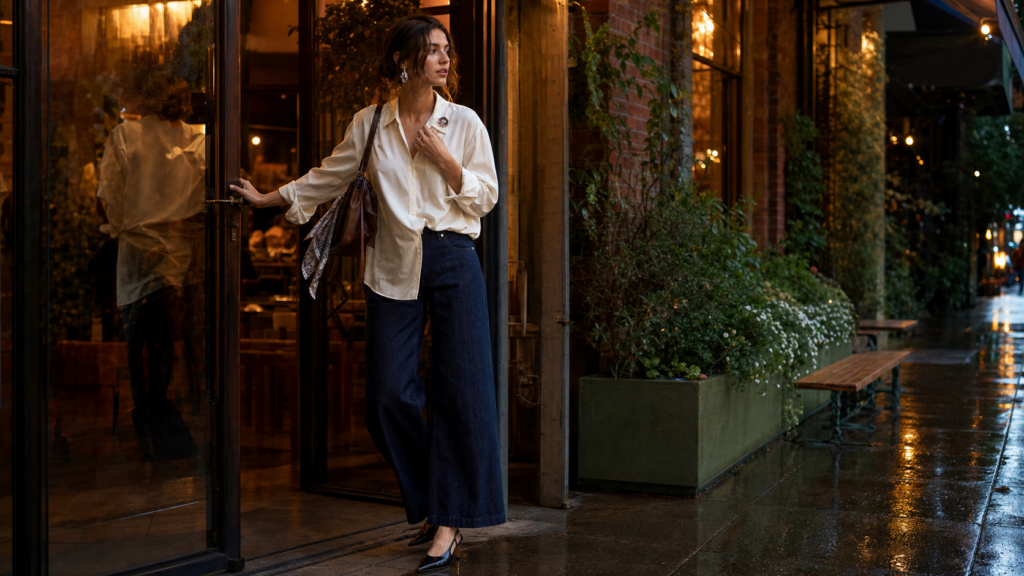
Fashion is dressing up again, but not in the old way. The return of polish in 2026 does not look like everyone rushing back into narrow suits, painful shoes and strict eveningwear rules. It looks more subtle and more useful: a low heel with loose jeans, a sculptural cuff with a white tank, a blazer worn like outerwear, a brooch on a cardigan, a silk scarf doing the work that a full outfit change used to do.
That distinction matters. After several years of quiet luxury, hybrid work, sneaker dependency and trend fatigue, many shoppers want style to feel intentional again. But they are not willing to give up comfort, climate logic or cost per wear to get there. The new dressed-up mood is not about becoming formal. It is about adding enough ceremony to daily clothes that getting dressed feels like a decision rather than an obligation.
Pinterest’s 2026 Predicts material helps explain the timing. Its trend map includes Glamoratti, Brooched, Poetcore and Opera Aesthetic, all of which point toward decoration, nostalgia, literary dressing and event-like detail. Vogue’s spring 2026 coverage also described the season as expressive, celebratory and personal, with uniform dressing pushed into more layered territory. Put together, these signals suggest that fashion is moving away from minimalism as a default setting, but not necessarily toward chaos. The strongest direction is controlled expression.
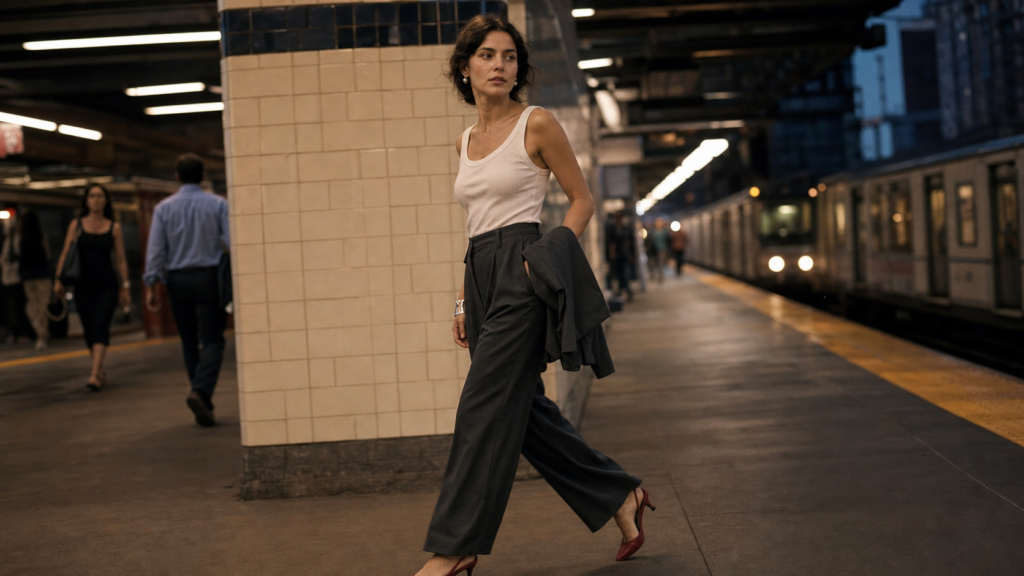
The clearest change is that polish is being detached from occasion. A heel no longer has to mean cocktail hour. A pearl or bold metal cuff no longer has to wait for a wedding guest outfit. A blazer does not have to signal corporate seriousness. Who What Wear’s 2026 coverage of casual heels captured this well: heels are being styled with relaxed trousers, oversized separates and off-duty basics, adding structure without making the outfit look overworked. This is the new formula: take something easy and add one element that raises the register.
Jewelry is doing a lot of that work because it is relatively low commitment. Marie Claire’s 2026 jewelry reporting points to a drift away from minimalism through bold metallics, colorful beads, leather cord pendants, sea-inspired pieces, functional pendants and everyday sparkle. The important part is not that everyone should wear more accessories. It is that accessories have become a practical way to make basic clothes feel authored. In a hot climate, a beaded necklace may be more realistic than another layer. In a rainy city, a brooch on a coat may carry more impact than delicate shoes. In a budget-conscious wardrobe, one strong cuff can refresh ten plain outfits.
This is why the new glamour works across different lives. In North American hybrid offices, it may mean a soft blazer, denim and a pointed flat rather than a full suit. In London or Amsterdam, where weather interrupts fantasy, it might be a trench, polished boot and vivid scarf. In Mediterranean or Australian heat, it can be a simple linen dress with metallic sandals and one substantial necklace. For readers who use wheelchairs, walk long commutes, manage school runs or stand all day, the point is not to suffer for polish. The point is to locate polish where it does not fight the body.
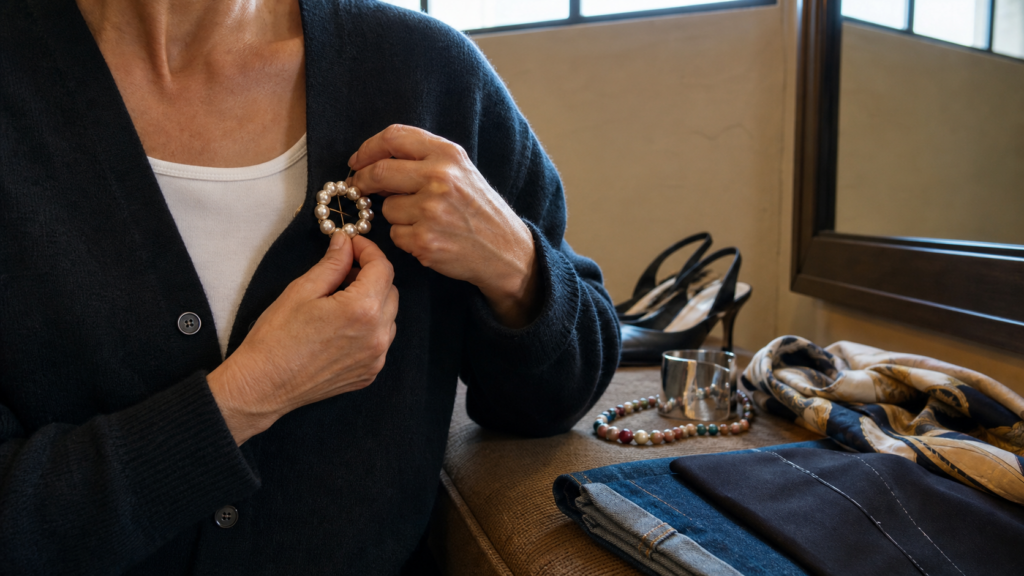
Fit and proportion decide whether this works. A low heel can feel modern with a loose trouser because the contrast is intentional; the same shoe with a too-tight outfit may read dated. A brooch can add character to a cardigan, but three heavy pins on a delicate knit may pull the fabric out of shape. A statement necklace can brighten deeper skin tones, add light near the face or define an open neckline, but scale matters on petite frames and on fuller busts. Dressing up in 2026 is less about buying a glamorous item and more about placing it intelligently.
There are three useful ways to understand the shift. First, everyday glamour is a response to boredom. Minimal wardrobes solved decision fatigue for many people, but they also made some closets feel emotionally flat. A scarf, brooch, colored stone or low heel gives the wearer a controlled dose of personality without requiring a full trend conversion.
Second, it is a response to value pressure. McKinsey and The Business of Fashion’s State of Fashion 2026 report describes a challenging industry environment shaped by economic pressure and changing consumer behavior. In that context, shoppers are less tolerant of items that only work once. The best dressed-up pieces now have to travel between lunch, office, dinner, errands and weekend plans. A formal dress that only works for one invitation is harder to justify than separates that can be dialed up or down.
Third, it is a response to the flattening effect of social media. When trends arrive as complete aesthetics, personal style can start to feel like downloading a costume. The new polish is more interesting when it interrupts the formula: a single opera-style earring with a T-shirt, a brooch on a field jacket, a silk scarf tied to a practical bag, a kitten heel under wide denim. The outfit still belongs to the wearer.
The most shareable insight is this: in 2026, dressing up is becoming a styling skill, not a dress code. The question is no longer “Is this outfit formal enough?” It is “Where does this outfit need intention?” Sometimes the answer is a shoe. Sometimes it is a texture, a neckline, a piece of jewelry, a pressed shirt, a color near the face or simply better posture created by a jacket that fits well.
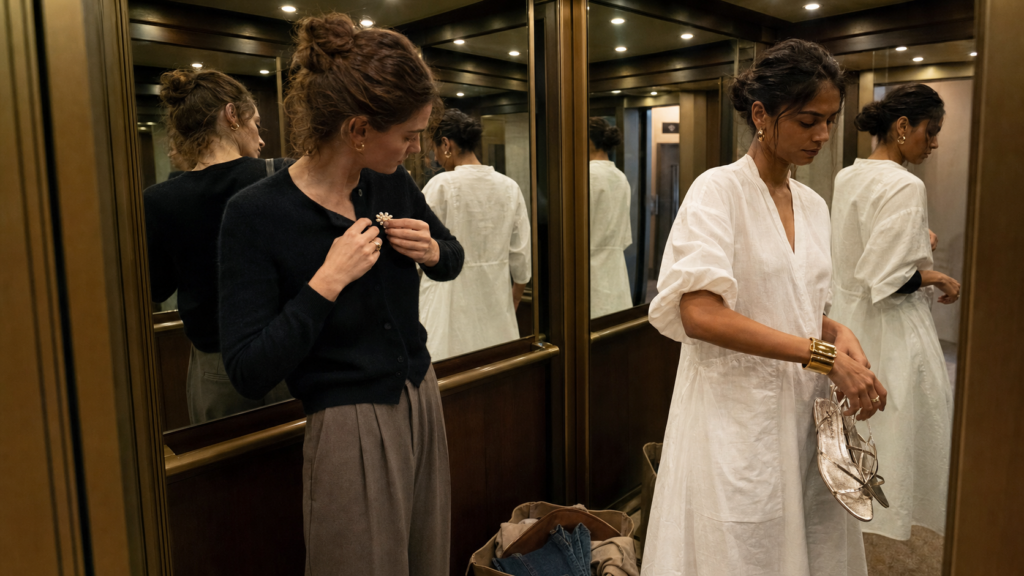
The risk is that this movement becomes another shopping trap. If every plain outfit is treated as unfinished until it has a new charm, shoe or necklace, polish becomes consumption by another name. The more useful approach is to choose a few repeatable signals: one strong metal, one color accent, one evening-leaning shoe that is still walkable, one scarf or brooch that can move from coat to knitwear to bag. Repetition is not a failure of style. It is how a wardrobe develops a signature.
What makes the 2026 version compelling is that it gives glamour back to daily life without asking daily life to become a fantasy. It accepts heat, commuting, hybrid schedules, body variation, budget limits and the fact that many people no longer want to be trapped by old ideas of “proper” dressing. The result is not perfection. It is a more flexible kind of polish: enough beauty to make the day feel considered, enough ease to actually live in it.