


Resale Data Is Becoming One of Fashion’s Most Immediate Trend Signals: Five Style Shifts for Spring/Summer 2026
For years, the fashion industry treated resale platforms as the endpoint of the clothing lifecycle: the place garments went after they had been worn, posted and passed on. That assumption is becoming too narrow. Resale marketplaces now hold large pools of search, listing and

For years, the fashion industry treated resale platforms as the endpoint of the clothing lifecycle: the place garments went after they had been worn, posted and passed on. That assumption is becoming too narrow. Resale marketplaces now hold large pools of search, listing and shopping behavior, which means they can show how trend interest is forming outside the traditional runway-to-retail calendar.
The eBay Watchlist Trend Report for Spring/Summer 2026, published on May 14, 2026, is a useful example. eBay says the report draws on signals from approximately 136 million active buyers and roughly 2.5 billion listings, with styling interpretation from resident stylist Brie Welch and comments from stylist Harry Lambert. The result is not pure data without editorial judgment, and it is not only a runway forecast. It is a blend of marketplace behavior and fashion interpretation.
That distinction matters. Many of the report’s specific figures are based on global searches on eBay from March 2025 to March 2026, while other claims refer to listings, purchases or average sales price. In other words, the report does not simply prove what everyone is buying. It shows what people are searching for, saving attention for and, in some cases, purchasing in the resale market. Used carefully, that makes it a valuable attention map.
The broader resale context is also significant. ThredUp’s 14th Annual Resale Report, released in 2026, estimates that the global secondhand apparel market could reach $393 billion by 2030 and account for around 10 percent of total apparel spend. The same report says the U.S. secondhand market grew nearly four times faster than the broader retail clothing market in 2025. Resale is no longer a side conversation; it is part of how many consumers think about value, access and wardrobe life span.

The strongest eBay signal is Quiet Confidence, a mood built around lived-in tailoring, soft structure and pieces that look considered without feeling stiff. According to eBay, global searches for slouchy blazers rose 1,495 percent year over year, while searches for The Row loafers rose 89 percent. That does not mean every reader needs an expensive loafer or an oversized blazer immediately. It does suggest that shoppers are looking for polish with ease: tailoring that can move through work, travel, school runs and weekend life without looking too formal.
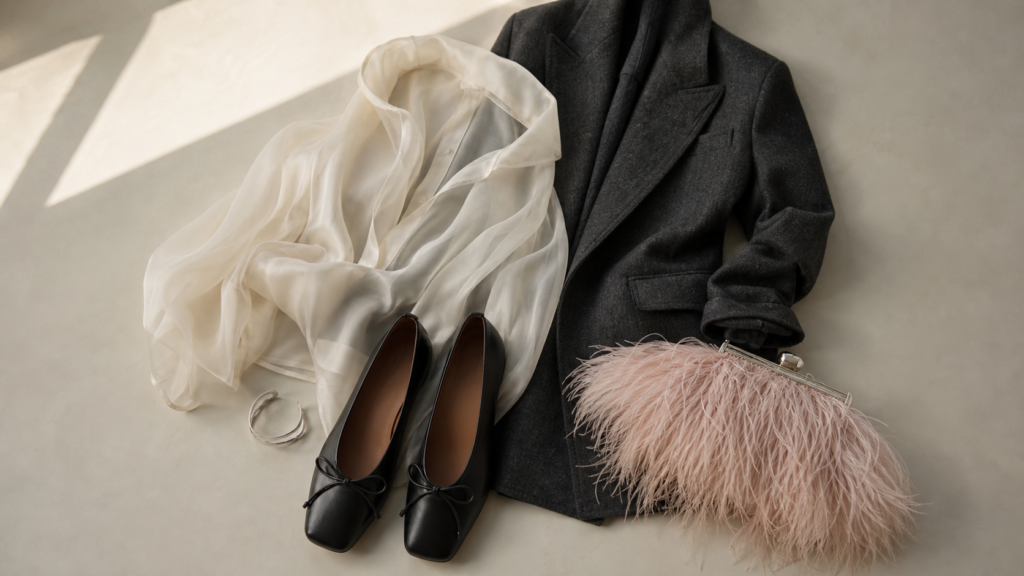
Running alongside Quiet Confidence is Weightless Drama, which eBay connects to sheer layers, feather detailing and romantic texture. Searches for feather detailing rose 31 percent year over year, while searches for Alaia ballet flats rose 58 percent. The useful style idea is not theatrical dressing for everyone; it is contrast. A translucent blouse over a tank, a soft skirt with a tailored jacket, or a textured flat shoe can add emotion to a practical outfit without overwhelming it.
Color Interruption gives the season a sharper visual pulse. eBay links the mood to unexpected color combinations and retro-inflected accessories, with searches for Missoni beanies up 56 percent and Chrome Hearts up 35 percent year over year. This does not mean neutrals have disappeared. It means resale shoppers are also looking for pieces that interrupt a quiet wardrobe: a saturated knit, a graphic accessory, or a color clash that makes old basics feel newly intentional.
Slightly Unsettled points in a different direction: less polished, more undone. eBay reports searches for Levi’s boot cut jeans up 67 percent and Balenciaga Le City Bag up 52 percent. The mood is about asymmetry, worn-in surfaces and proportions that feel personal rather than perfected. For readers, the safest translation is not to buy into disorder for its own sake, but to leave room for imperfection: a faded jean, a less structured bag, a hemline that breaks up a too-clean outfit.
The fifth mood, Drenched in Disruption, is the most theatrical and the easiest to overstate. eBay frames it around bolder, more subcultural or statement-driven pieces that break the smoothness of conventional styling. In everyday terms, this might mean one disruptive item rather than a whole costume: an intense color, a graphic knit, a metallic surface, a sharply shaped accessory. The strongest version works when it clarifies the wearer’s taste, not when it turns the outfit into a trend checklist.
For international readers, the usefulness of resale trend data goes beyond knowing which items are climbing. It changes the logic of what a trend can mean. A runway trend tells you what designers proposed. A resale trend shows what platform users are actively searching for, listing, watching and sometimes buying across a large marketplace. A slouchy blazer can be a lightweight linen version in Los Angeles, a wool blend in London or an oversized cotton twill in a humid city. A sheer layer can mean an organza shirt over a tank in New York or a mesh beach cover-up in coastal Australia.

It is still important not to romanticize resale data. eBay reflects a huge marketplace, but it is still shaped by platform demographics, supply, geography, algorithms, brand availability and price. A spike in search interest does not guarantee long-term resale value. It also does not mean a product belongs in every wardrobe. Resale data can be more behaviorally grounded than a runway mood board, but it is not a perfect democratic mirror of style.
ThredUp’s report adds another useful layer. It says 60 percent of consumers report that resale value influences their initial purchase decision, up 13 percentage points year over year, and 41 percent consider resale potential before buying new. That suggests more shoppers are thinking about a garment’s afterlife earlier in the buying process. But this should not turn fashion into a financial game. Resale value is one practical filter among many, alongside fit, comfort, climate, care, budget and how often something will actually be worn.
The best way to read eBay’s SS26 Watchlist is as evidence of attention, not as a shopping order. Quiet tailoring, sheer texture, sharper color, undone denim and disruptive accessories are all gathering interest, but none of them guarantees value or personal relevance. Resale data is becoming one of fashion’s most immediate trend signals because it captures behavior while it is happening. Its real use is not to tell readers what to buy next, but to help them understand which style ideas are moving from fashion conversation into everyday search.